If a pipe has burst
Water damage grows by the minute. Act in this order.
- 1Close the main water shutoff and open the lowest faucet to drain the lines.
- 2Turn off power in any area with standing water.
- 3Move belongings out of the wet area and photograph the damage.
- 4Call a plumber and your insurance company.
- 5Dry the area quickly. Mold can start within a couple of days.
Why pipes freeze and burst
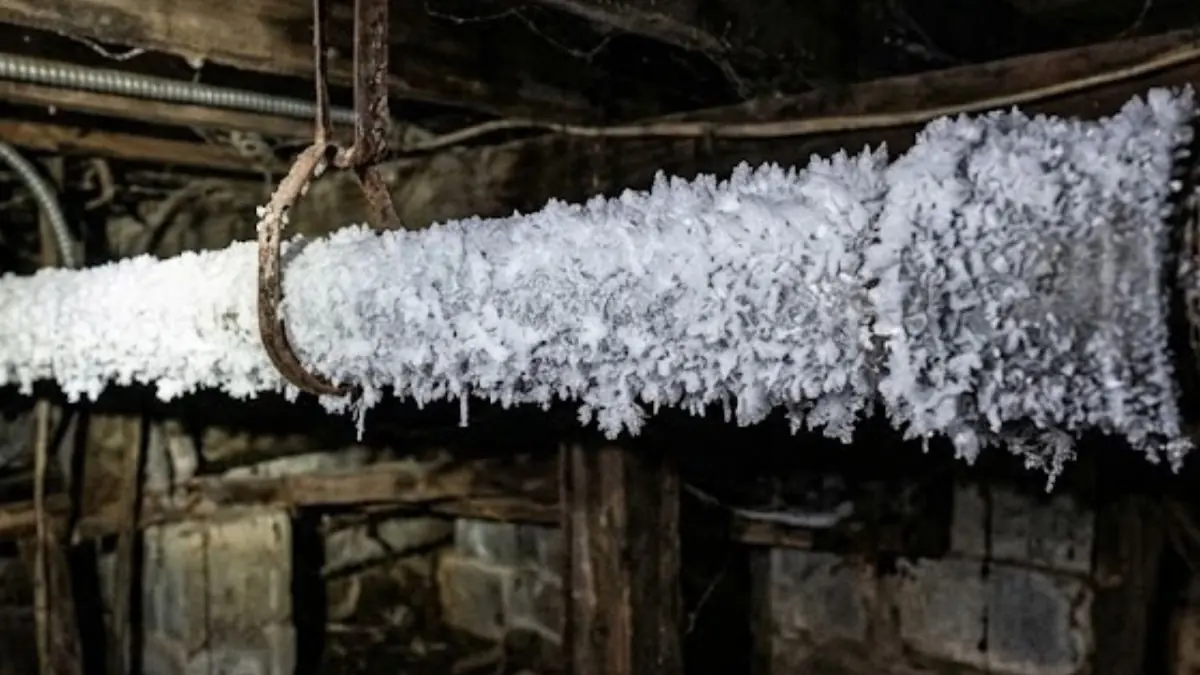
Water expands as it turns to ice. The pressure builds between the ice blockage and the closed faucet, and the pipe splits, usually at its weakest point. The split often does not show until the ice melts, when water begins to flow again.
Pipes in unheated crawlspaces, exterior walls, attics and garages are the most exposed, and so are outdoor hose bibs and irrigation lines. Chapel Hill and Carrboro winters are milder than in many places, which catches people off guard. A few nights below freezing can split exposed pipes.
Before a cold night
These steps take an hour and prevent most damage.
- 1Disconnect hoses. Remove garden hoses and shut off the outdoor hose bib from the inside if there is a valve.
- 2Insulate exposed pipes. Foam sleeves on pipes in crawlspaces and garages help.
- 3Open cabinet doors. Warm room air reaches the pipes on exterior walls.
- 4Let a faucet drip. A slow trickle on the line most exposed keeps water moving.
- 5Know your shutoff. Find the main valve now and make sure it turns.
If a pipe is frozen but not burst
Thaw it slowly and watch for leaks.
- 1Open the faucet. The water has to go somewhere as the ice melts.
- 2Apply gentle heat. Use a hair dryer, a heating pad or warm towels. Never use a torch or open flame.
- 3Work toward the faucet. Start near the tap and move back along the pipe.
- 4Check for leaks. When water flows, look along the pipe for a split.
- 5Call a plumber if it will not thaw. Or if the frozen section is in a wall or under the floor.
Where freezes tend to happen
Check these places before cold weather.
| Location | Risk | Protection |
|---|---|---|
| Crawlspace | Cold air through vents | Insulate pipes, close vents in cold snaps |
| Exterior wall | Cold wall cavity | Open cabinet doors, keep heat on |
| Garage | Unheated | Insulate, keep door closed |
| Outdoor hose bib | Direct exposure | Disconnect hose, cover the bib |
| Attic | Cold air | Insulate above the pipes |
Chapel Hill and Carrboro notes
OWASA supplies water to the area, and its meter and the line up to it are the utility's responsibility. If the break is on the street side of the meter, call OWASA. If it is inside the property line, it is yours. See our water service line repair page for the buried line between the meter and the house.
Pipes in uninsulated walls, crawlspaces and exterior walls are the ones that freeze first, in any house, including in Meadowmont and Southern Village. If you travel in winter, keep the heat on at a moderate temperature and ask a neighbor to check the house.
Insurance and cleanup
Sudden burst pipe damage is often covered by homeowners insurance, though the pipe itself may not be. Photograph everything and keep receipts. We fix the pipe. Drying and rebuilding are separate trades, and we can recommend you contact a water damage restoration company.
Winter travel and vacant house checklist
A house that sits empty during a cold snap is the most exposed. If you are leaving for more than a day or two in winter, keep the heat on at a moderate setting so the walls do not get cold. Open cabinet doors under sinks on exterior walls.
Consider shutting off the main water valve and draining the lines if the house will be empty for a long time, and ask a neighbor or friend to check the house. A water leak sensor near the water heater or under a sink can send an alert to your phone. Know where the main shutoff is and make sure it turns.
If you return and find a burst pipe, close the main valve, stay out of any room with standing water near electrical outlets and call us. Our 24/7 line is answered any time, and we can dispatch a plumber as soon as one is available.
What to do after the water is back on
Once the pipe is repaired and the water is restored, run each faucet for a minute and check the walls, ceilings and floors for new stains over the next few days. Slow leaks sometimes appear once pressure returns. If the freeze happened once, it can happen again, so add insulation or move the pipe if the route is exposed. Our leak detection page explains what to do if you suspect water is still escaping somewhere you cannot see.
Where the drying advice comes from
According to the U.S. EPA's mold guidelines, water-damaged areas should be dried within 24 to 48 hours. Past that window, mold can start in drywall, insulation and wood, which is why we say to act at once even after the pipe is repaired.
Common questions
Exposed pipes can freeze after a sustained period below freezing. Wind and unheated spaces make it worse. We do not give an exact temperature.
A slow drip on the most exposed line helps. It uses little water compared to a burst.
Yes. Our line is answered 24/7. See burst pipe repair.
OWASA. Call them for the street side.
Yes. See our Carrboro page and all of our service areas.