When replacing beats repairing
A repair makes sense when one part has failed and the tank is sound. Replacement makes sense when the tank shell leaks, when the unit has reached the end of its normal life or when repair costs start to rival a new heater. A tank that leaks from the bottom cannot be repaired at any price.
Age matters, but condition matters more. We read the serial number on the data plate, check the anode rod, look for rust at the fittings and test the heating components. Then we tell you whether a repair buys you real time. If it does not, we move to the installation plan for the new unit.
Failed tank emergency: what to do first
A tank that is actively leaking can spill dozens of gallons into a garage, closet or crawlspace. Acting early limits drywall and flooring damage, and our 24/7 line is the fastest way to get a replacement scheduled.
Work through these steps while you wait.
- 1Close the cold water shutoff valve above the tank, then open a hot tap somewhere in the house to relieve pressure.
- 2Turn off power at the breaker for an electric unit or set a gas unit to its pilot or off position.
- 3If you smell gas, go outside and call the gas utility or 911 first.
- 4Mop standing water and run a fan or dehumidifier. Wet drywall that stays damp past two days can grow mold.
- 5Photograph the leak and the data plate for your insurer.
Choosing the replacement type
Your replacement options depend on fuel, space and how much hot water the household uses at one time.
| Option | Best fit | Trade-offs |
|---|---|---|
| Standard tank, same fuel | Quick swap, existing connections | Lowest installed cost, recovers slowly after heavy use |
| Larger tank | Households that run out of hot water | Needs space and may need new venting or pan |
| Tankless water heater | Continuous hot water, small footprint | Higher upfront cost and often a gas line or venting change |
| Hybrid heat pump | Lower electric use in a garage or basement | Needs air space and a condensate drain |
We quote the like-for-like option first and list upgrades separately, so you can compare without pressure.
What the replacement visit includes
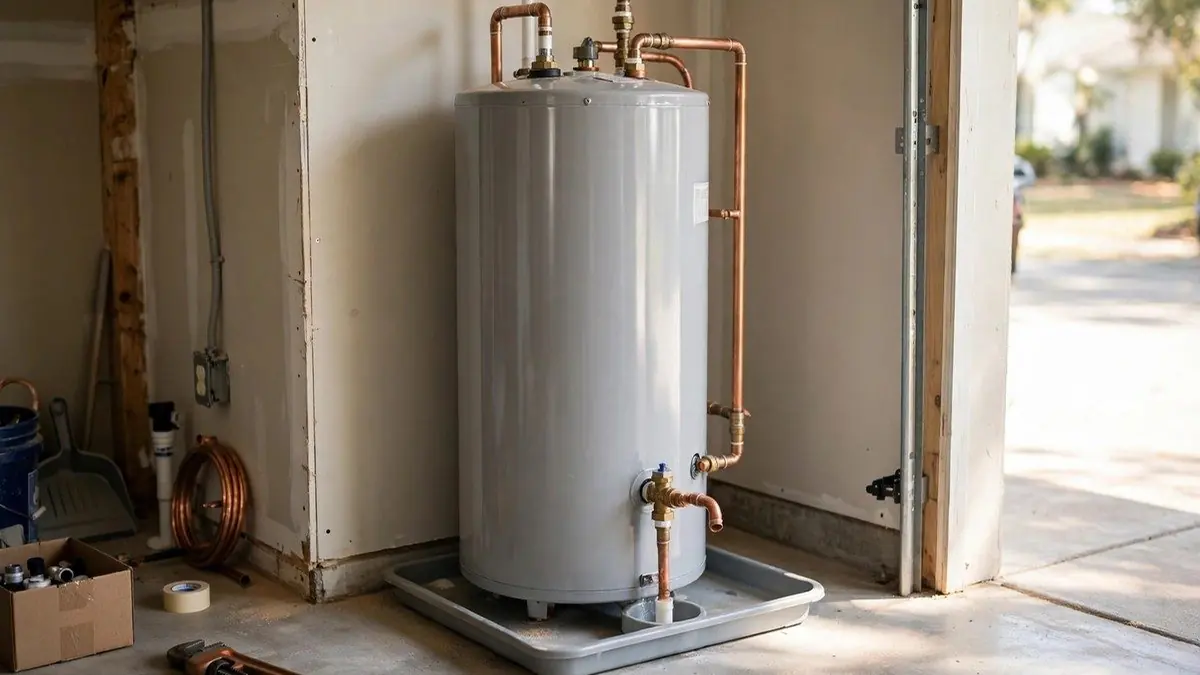
Expect the plumber to confirm the tank size and fuel, shut off water and power, drain and disconnect the old unit and set the new one on a pan or stand where required. New supply connectors, a temperature and pressure relief valve and a discharge line are part of a sound install. For gas units, the vent and gas connections are tested before the pilot is lit.
Chapel Hill's building permits and inspections page lists water heaters under its Trade Work permit. We pull permits where required for your address and schedule the inspection. A Chapel Hill inspector books arrival windows by phone on the morning of the inspection, and an adult must be present, so plan to be home or have someone available.
Replacement notes for Chapel Hill homes
OWASA's 2022 water quality report says chloramines are used year-round except in March. Rubber parts in old connectors and expansion tanks can age faster under chloramine, which is why we replace them with chloramine-resistant parts during a water heater swap.
Homes built before the 1986 ban on lead solder may still have solder joints on copper supply lines, according to OWASA's report. When we cut into those lines for a new heater, we point out any old joints so you can decide whether to schedule further work. The report does not give a hardness figure, so we avoid guessing and suggest testing your tap if scale is a concern.
Signs the tank is at the end of its life
Look for a pattern rather than a single symptom. Two or more of these suggest it is time to plan a replacement.
Moisture at the base
Weeping from the bottom seam or a damp pan means the tank wall is breached.
Rust in hot water
Brown water from hot taps only suggests the tank interior is corroding.
Frequent repairs
A third service call in a short span usually means the unit is failing broadly.
Long recovery times
Heavy sediment insulates the water from the burner or elements and the tank never quite catches up.
What goes into a replacement price
We quote a clear price before work starts. The usual drivers are below.
If a tank failure floods part of the home, your homeowners policy may respond to the water damage even though it will not pay for the heater itself. Ask your insurer before you discard anything.
Code points we follow on a replacement
A replacement is not just a swap of the tank. The North Carolina Plumbing Code, built on the International Plumbing Code (IPC), calls for a relief valve with a discharge line, and gas units must be vented and connected under the state's fuel gas code and the manufacturer's installation instructions.
Where the incoming pressure is high or a check valve prevents water from backing up, we also look at whether an expansion tank is needed.
Need a replacement scheduled?
Call and give us the tank size, fuel type and location. We will plan the job before arrival.
Common questions
Yes. The line is open 24/7. A leaking tank is treated as urgent, and we offer same-day appointments when available for planned swaps.
Match the household's peak use. A family running showers and a dishwasher together needs more capacity than a pair of adults. We read the existing data plate, ask how hot water is used and recommend a size.
Usually, yes, but it can involve a bigger gas line, new venting or electrical work. The tankless page lays out what we check before we quote.
We drain it, disconnect it and take it with us as part of the visit.
The Town of Chapel Hill's Trade Work permit page lists water heaters among covered plumbing work. Carrboro handles its own inspections through its Inspections Division, so rules for a Carrboro address come from that office.
Yes. Our Carrboro page has the details, and the same line serves both towns.