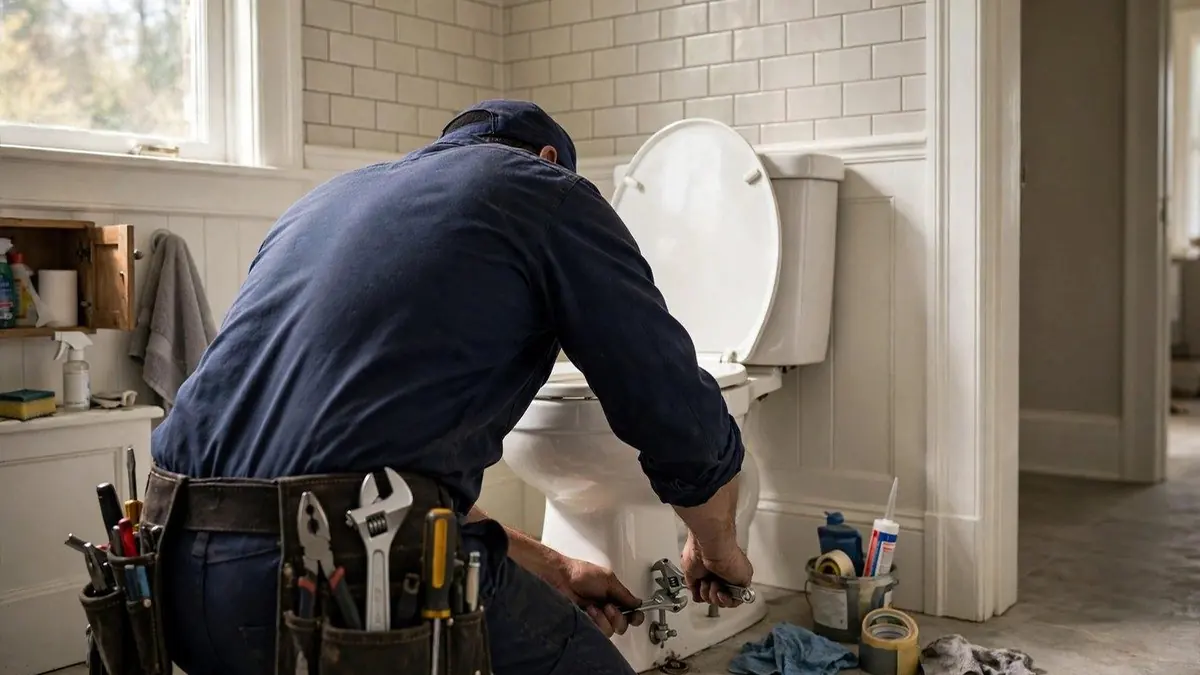
If the toilet is overflowing
An overflowing toilet can ruin a floor fast. Stopping the water takes only a few seconds.
- 1Lift the tank lid and push the flapper down, or close the shutoff valve behind the toilet by turning it clockwise.
- 2Do not flush again. Wait for the water level to drop before you try a plunger.
- 3Use towels to contain water. Move rugs and anything on the floor.
- 4If other fixtures are gurgling, the clog may be in the main line. Stop using water and call.
- 5Call us if the water will not stop or sewage is coming up.
Symptoms and their usual causes
Most toilet problems come from a handful of parts. Match what you hear and see.
| What you notice | Likely cause | Fix |
|---|---|---|
| Runs on and off | Worn flapper or fill valve | Replace the part |
| Weak flush | Clogged rim jets or low water in the tank | Clean or adjust |
| Water around the base | Failed wax ring or loose bolts | Reset the toilet with a new ring |
| Wobbles | Loose bolts or damaged flange | Tighten or repair the flange |
| Clogs repeatedly | Partial blockage or venting issue | Clear the line, camera if needed |
Running toilets and the chloramine connection
A running toilet wastes water and can add to your OWASA bill without making a sound. The usual cause is a worn flapper that no longer seals. OWASA's water quality report says chloramine is used as the disinfectant for most of the year and advises using rubber parts that resist chloramine. Cheap flappers can degrade faster, which is why we install chloramine-resistant ones.
A dye test confirms a flapper leak. Add a few drops of food coloring to the tank, wait ten minutes without flushing, and see whether color reaches the bowl. If it does, the flapper is leaking. Our leak detection page covers what else to check when the meter keeps moving.
Leaks at the base and the wax ring
A toilet sits on a wax ring that seals it to the drain flange. If the ring fails or the toilet rocks, water seeps out at the base. The seep is slow, so the subfloor can rot before you see more than a damp spot. Soft flooring around a toilet is a warning.
We pull the toilet, inspect the flange and the floor, install a new ring or flange repair and reset the toilet level and tight. If the floor is soft, we tell you before we close it up.
What a toilet installation involves
New toilets are a common upgrade. A correct install takes more than swapping bowls.
- 1Check the flange. The flange should be sound and at the right height for the new floor.
- 2Set the bowl. A new wax ring or seal and the right bolts hold it in place.
- 3Connect the supply. A new braided supply and shutoff valve prevent future leaks.
- 4Test. We flush, check for leaks and confirm the tank fills to the right level.
Buying a toilet? Check the rough-in distance from the wall to the drain, usually twelve inches but not always, before you order.
Toilets in older Chapel Hill homes
Older homes may have cast iron or lead-era components below the toilet, floors that have been replaced more than once and flanges set at odd heights. OWASA's report notes that homes built before the 1986 lead solder ban may have lead solder on copper supply lines, and replacing a supply valve is a chance to look at that.
In newer villages like Meadowmont and Southern Village, tight bathrooms and shared walls make a leak harder to see. A leak above a ceiling is a common way people find out a wax ring has failed.
When a toilet clog is a bigger problem
A clog that clears with a plunger is routine. A toilet that clogs repeatedly, or a clog that makes other drains gurgle, points deeper. See drain cleaning or sewer line cleaning.
What toilet repair costs depend on
We quote a clear price before work starts.
Water damage from a toilet leak may be covered by homeowners insurance if it is sudden. Slow leaks are often excluded.
Water use and the WaterSense label
According to the U.S. EPA, toilets with the WaterSense label use 1.28 gallons per flush or less and pass independent performance testing. If you are replacing a toilet that is more than a few decades old, a WaterSense model can use much less water per flush than the old one, and still clear the bowl.
We can read the label on your existing toilet and tell you what a replacement would change.
Toilet acting up?
Call us and describe the problem. Most repairs can be explained in one conversation.
Common questions
Yes. The 24/7 line takes calls any time, and we offer same-day appointments when available.
Lift the lid, see whether the flapper is sealing and check the fill valve. If it still runs, call. A running toilet can waste a lot of water.
If the porcelain is sound, repairing parts is usually enough. A cracked bowl or tank, a toilet that wastes water or one that clogs constantly may be better replaced.
Yes. Check the rough-in measurement before you buy, and we will tell you if the flange needs work.
Yes. See our Carrboro page.