When a leak is an emergency
A slow, hidden leak is urgent but not frantic. Water you can see, hear or feel pouring is an emergency. Act first, then call.
- 1Close the main water shutoff if water is flowing or a ceiling is bulging.
- 2Turn off power to any room where water is dripping near outlets or fixtures.
- 3Move belongings out from under wet ceilings and away from wet floors.
- 4Check the meter with every fixture off. A moving dial confirms a leak somewhere.
- 5Call our 24/7 line and describe the stains, sounds and bill changes you have noticed.
How leaks get found without demolition
Finding a leak is a process of elimination. We start with the cheapest, least invasive test and work toward the exact spot. That keeps the walls intact and the price reasonable.
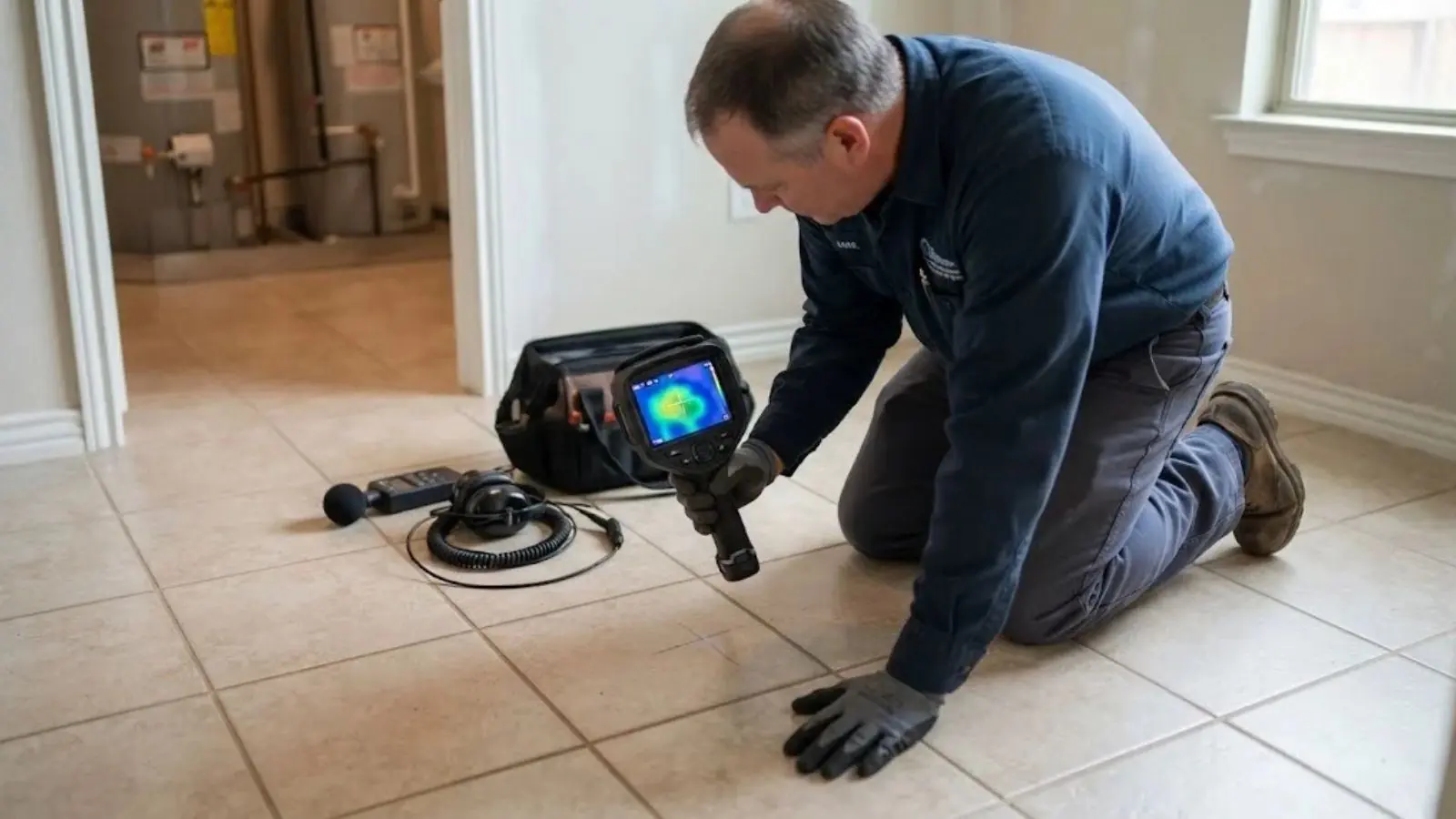
We use a meter test to confirm that water is moving when it should not be. Pressure tests isolate which line is leaking, and acoustic listening picks up the sound of escaping water. Thermal imaging shows temperature differences, and tracer gas helps with lines that will not give themselves up any other way.
The sequence we follow
Every leak is different, but the order is nearly always the same.
- 1Read the meter. With every fixture off, a moving meter dial or flow indicator means water is going somewhere.
- 2Split the house from the street. Closing the main shutoff and watching the meter separates a leak inside from one on the service line.
- 3Test sections. We isolate hot, cold, irrigation and fixtures to narrow the search.
- 4Pinpoint. Acoustic microphones, thermal imaging or moisture meters locate the exact spot.
- 5Explain options. You see where the leak is and what repair, access and cost look like.
Where leaks hide in a Chapel Hill home
Leaks hide in different places depending on the house. Here are the ones we see most.
Slab leaks
Houses built on a concrete slab run supply lines or drains through or beneath the concrete. A leak under the slab can warm a floor, create a hum or hiss, raise the bill or stain flooring. We pinpoint it with listening and thermal tools before any cutting. Repair options include a spot repair through the slab or rerouting the line through the attic.
Walls and ceilings
A brown stain on a ceiling below a bathroom, bubbling paint or a musty smell inside a wall often traces to a supply line, a shower valve or a failed drain joint. A moisture meter and thermal camera show how far the damage runs.
Crawlspaces
Plenty of Chapel Hill homes sit on a crawlspace. Sagging insulation, a damp smell or pooled water under the house suggests a leak or drainage trouble. Our sump pump repair page covers the drainage side.
Buried lines, irrigation and pools
Underground leaks show up as a wet patch in the yard, a lawn that stays green in a dry week or a meter that moves with everything off. Irrigation lines and pool supply lines leak in the same way. We isolate them with a pressure test first.
High water bill and the meter test
A sudden rise in your water bill is often the first clue. The cheapest first step is one you can do yourself. Turn off every fixture and appliance, then check whether the meter still moves. A leaking toilet flapper is the most common culprit, and a few drops of food coloring in the tank shows it quickly.
If the meter keeps moving after you rule out the toilets, call us. OWASA reads the meter and bills the home, and OWASA can tell you about your usage history. We can tell you where the water is going.
A tip for toilets
Put a few drops of food coloring in the toilet tank and wait ten minutes without flushing. If color shows in the bowl, the flapper is leaking. OWASA's report advises chloramine-resistant rubber parts, and a worn flapper is a common reason water leaks. Our toilet repair page explains the fix.
Leak symptoms and where to look first
This table matches what you notice to the first thing we test.
| What you notice | Likely area | First test |
|---|---|---|
| Meter moves with everything off | Service line, slab or buried line | Main shutoff test |
| Warm spot on the floor | Hot water line under slab | Thermal imaging |
| Ceiling stain under bathroom | Supply or drain above | Moisture meter |
| Wet yard patch, no rain | Service line or irrigation | Pressure test |
| Low pressure at every tap | Leak or failed pressure valve | Static pressure check |
Local rules on leaks and your meter
Water and sewer service in Chapel Hill and Carrboro comes from OWASA. If the leak is on the utility side of the meter, OWASA handles it. If it is on the house side, it is yours to fix, and this is the dividing line we help you identify. See water service line repair if the leak is between the meter and the house.
Heavy rain can mimic a leak by soaking a crawlspace. After storms such as the July 2025 flooding that hit parts of Chapel Hill and Carrboro, we first confirm whether water is coming from a pipe or from the ground.
What affects the price of leak detection
We quote a clear price before work starts. These are the things that change it.
If the leak damages walls or floors, your homeowners policy may cover the water damage. It often does not cover the pipe repair itself or the cost of finding the leak, so ask your agent about your policy.
What public data says about household leaks
According to the U.S. EPA, the average household's leaks can waste more than 9,300 gallons of water every year, and that nine percent of homes have leaks that waste 50 gallons or more per day. Toilets are a common source, and EPA's own advice for finding one is a few drops of food coloring in the tank, with ten minutes to see whether color reaches the bowl.
Those figures are national averages, not a measure of your house. They are a reason to run the meter test even when nothing looks wrong.
Think you have a hidden leak?
Call the 24/7 line. Tell us about the meter and any stains, and we will plan the search.
Common questions
Warm spots on the floor, the sound of running water with everything off, a meter that moves constantly and unexplained dampness at the baseboards all point that way. A plumber confirms with listening and thermal tools.
Yes. Our 24/7 line takes calls any time, and we offer same-day appointments when available. If water is actively pouring out, close the main shutoff and call right away.
Not usually for detection. We narrow the spot with non-invasive tools first. Repair may need a small opening, and we explain that before we start.
Check the toilets with dye, then see if the meter moves with everything off. If it does, call us. We can tell you whether the leak is on your side of the meter.
Yes. We pressure-test the line to confirm whether it holds, then locate the leak with acoustic tools.
Yes. Our Carrboro page has the details.