Signs a sewer line has failed
A broken sewer line is not always dramatic. It can start with a slow drain and end with sewage in the yard or the basement. These signs mean it is time to call.
- 1Several fixtures back up at once, or a floor drain bubbles when the washer runs.
- 2A patch of soggy, unusually green grass or a sunken spot in the yard above the line.
- 3A strong sewer smell near the foundation or in a crawlspace.
- 4Repeat clogs that cleaning only fixes for a few weeks.
- 5Sewage in a tub, shower or floor drain. Stop using water and call right away.
Leave sewage backups to professionals. Wastewater can carry bacteria, so keep children and pets away and wear gloves if you must touch anything it reached.
Repair options explained
The right repair depends on how much of the pipe has failed and how deep it sits. We lay out each option with its limits.
Spot repair
If one section has cracked or separated, we dig down, cut out the damaged piece and replace it. This is the least expensive option and fits a clean, localized failure.
Pipe lining
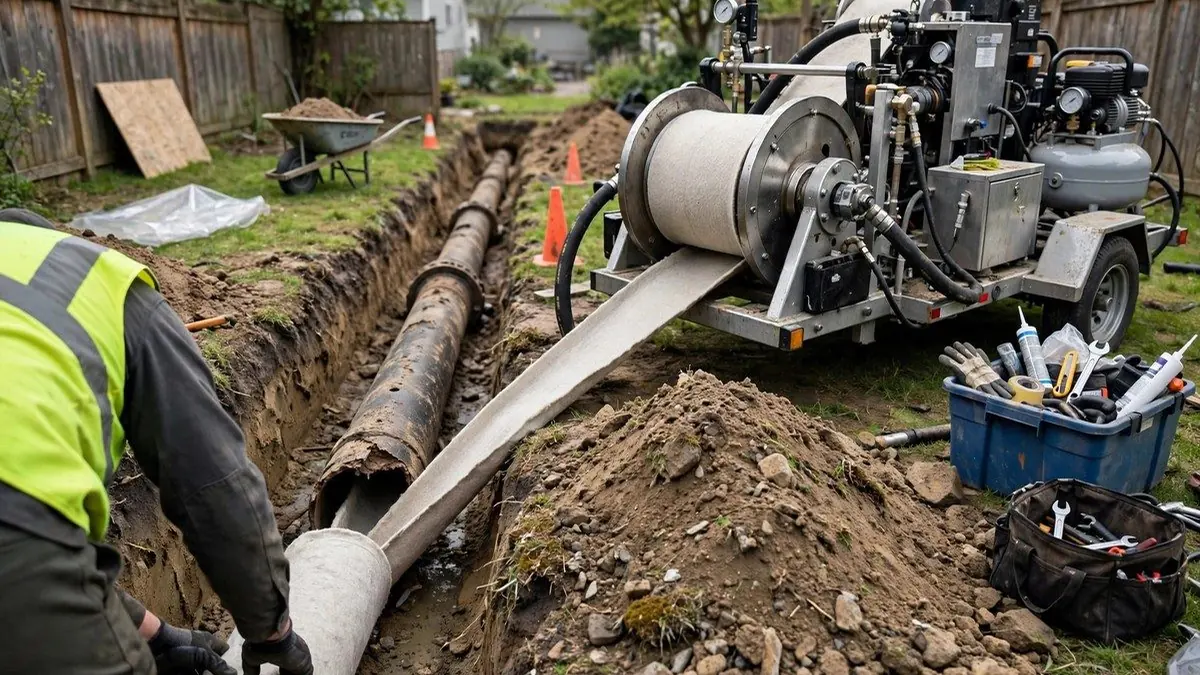
Cured-in-place lining pulls a resin-soaked liner through the existing pipe and hardens it, forming a new pipe within the old one. It avoids trenching across a yard or driveway and works on pipe with cracks and root entry points. It does not fix a collapsed or badly sagging pipe, and it slightly reduces the interior diameter.
Full replacement
When the pipe is collapsed, severely offset or made of failing material, we replace it. That may mean trenching or a trenchless pull-in method, depending on the route.
Cast iron and older pipe materials
Homes from the mid-twentieth century often have cast iron, clay or fiber drain lines. Cast iron rusts from the inside and flakes into rough scale that catches debris, and it can crack at joints. Clay joints let roots in. Fiber pipe can soften and deform with age.
We identify the material on camera, because it decides which repair is possible. Chapel Hill's older neighborhoods around the historic districts are where we see this most, though it can turn up anywhere a house predates modern plastic.
Repair method at a glance
Here is how the three methods compare for a typical residential lateral.
| Method | Best for | Limits |
|---|---|---|
| Spot repair | One cracked or separated section | Needs excavation at that spot |
| Pipe lining | Cracks, root entry and light corrosion | Cannot fix collapsed or heavily offset pipe |
| Replacement | Collapsed, bellied or failed pipe | Highest cost, most disruption |
Our sewer inspection page explains the camera work that makes this choice clear.
Sewer lines and OWASA in Chapel Hill
OWASA operates the public sewer system in Chapel Hill and Carrboro. The private lateral from your house to the public main is generally the owner's responsibility up to the connection, but the exact boundary depends on where the lateral meets the main. We help you work out where OWASA's responsibility ends for your address.
The Town of Chapel Hill lists the repair or extension of water or sewer lines under its Trade Work permit. Carrboro addresses go through the Town of Carrboro's inspections office. We pull the right permit and schedule the inspection.
Why we camera before we dig
Digging is the most expensive part of sewer work. A camera run confirms the failure point, the pipe material and the depth before anyone breaks ground. It also protects you from a repair that treats a symptom, so the line you pay to fix is the line that is actually failing.
What a sewer repair price depends on
We quote a clear price before work starts. The main drivers are below.
Some homeowners policies and utility-sponsored plans cover sewer lateral repair. Ask your insurer or OWASA what applies to your address.
Lining standards and what they mean for you
Cured-in-place pipe lining is described in ASTM F1216, the standard practice for rehabilitating existing pipelines with a resin-impregnated tube. Not every contractor follows it the same way, so we ask what cure method and wall thickness a liner will have before we recommend one.
We also describe defects in the plain terms the pipeline industry uses, such as cracks, offsets and root intrusion, so the footage and the quote match.
Need the failure located and fixed?
Call the 24/7 line. We will plan the camera and repair together.
Common questions
If cleaning clears the blockage and it stays clear, cleaning was enough. If it returns within weeks or months, a camera inspection usually finds a crack, offset or root problem that needs repair.
We handle emergencies around the clock, and our 24/7 line dispatches a plumber for backups. Permanent repairs usually need daylight and a permit, so we stabilize the line first and schedule the repair.
It is a good option for cracked but intact pipe, and it avoids trenching. It is not suitable for collapsed pipe. We show you the camera footage and explain the choice.
OWASA handles the public main. Your lateral is generally yours up to the connection. We help you find where the line changes ownership.
Yes. See our Carrboro page.