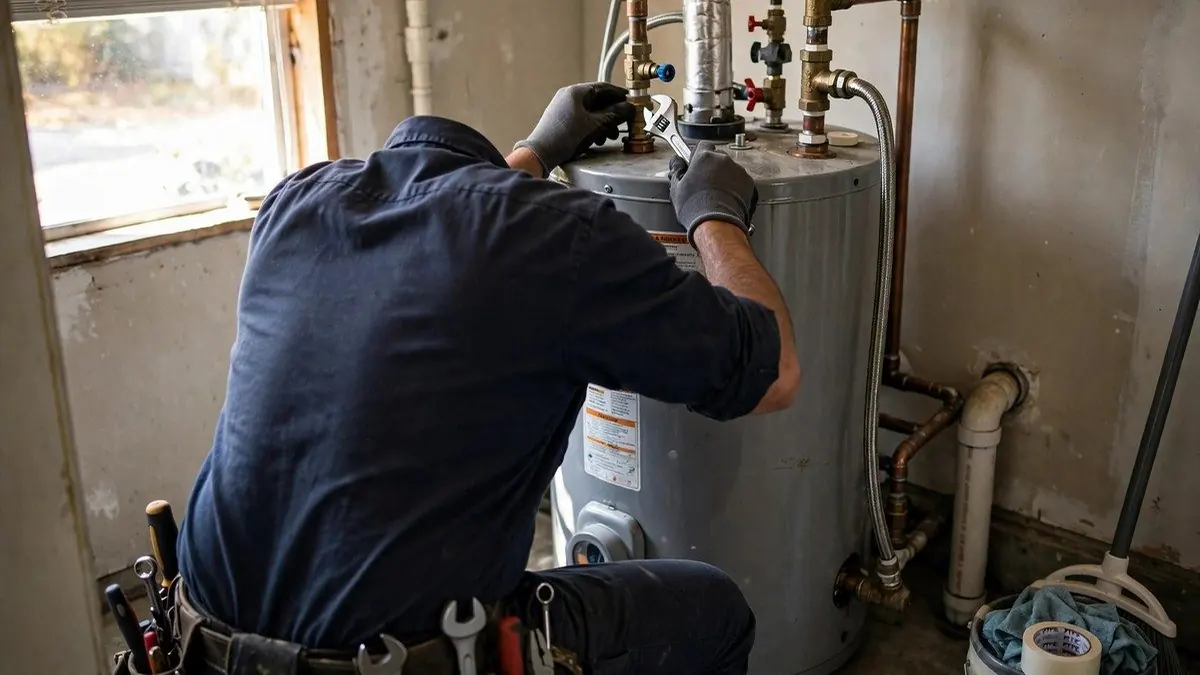
Start here: is it a repair or a replacement?
A water heater has two kinds of problems. Some are worn parts, such as a heating element, a thermostat or a gas control valve. Those repairs are routine and usually finish in one visit. The other kind is a failed tank, where the steel shell has rusted through and no part swap will fix it.
A puddle under the tank is the dividing line. Water dripping from a fitting or a relief valve is often repairable. Water seeping from the bottom of the tank itself means the lining has failed, and we will walk you through the replacement options instead of selling a repair that will not last.
When a water heater problem is an emergency
Cold water is an inconvenience. A leaking tank, a rotten-egg smell from a gas unit or a relief valve that keeps discharging is an emergency, and the 24/7 line is for exactly those calls. We offer same-day appointments when available and will say plainly if the problem can wait until morning.
Here is what to do while you wait for the plumber.
- 1Turn the water heater thermostat to its lowest setting, or switch off the breaker for an electric unit.
- 2Close the cold water shutoff valve on the pipe feeding the top of the tank to stop the leak from refilling it.
- 3If you smell gas, leave the house and call the gas utility or 911 before you call a plumber. Do not flip switches on the way out.
- 4Place a bucket under a slow drip and a towel dam around a spreading puddle, and move boxes off the floor.
- 5Take a photo of the data plate on the side of the tank. It shows the model, age and capacity and helps us bring the right parts.
Symptoms we diagnose and the usual cause
Callers rarely say the part name. They describe what they see or hear, so we start from the symptom.
No hot water at all
On an electric unit this is often a tripped breaker, a failed upper thermostat or a burned element. On a gas unit it points to the pilot, thermocouple or gas valve.
Water that runs out fast
A broken dip tube or a failed lower element sends cold water to the outlet, so the hot supply shrinks to a few minutes.
Popping or rumbling noises
Sediment baked onto the bottom of the tank traps steam bubbles. Flushing can help, but heavy buildup shortens the tank life.
Rusty or smelly hot water
Rust-colored water from the hot side only suggests a corroded tank or a depleted anode rod. A sulfur smell often means the anode is reacting with the water.
Gas, electric and hybrid units need different repairs
Because homes in Chapel Hill run on a mix of fuels, we carry a short checklist for each type before we open a panel.
Gas water heaters
We check the thermocouple, the pilot or igniter, the burner, the flue draft and the gas control valve. Any gas smell or sooting at the draft hood ends the repair until the venting is confirmed safe.
Electric water heaters
We test the elements and thermostats with a meter, check the breaker and the high-limit reset, and look for water inside the element compartment. These repairs are usually quick.
Hybrid heat pump units
Hybrid units combine a compressor with backup elements. They fail in ways that look like standard electric heaters but include condensate drains, air filters and error codes. We read the display code first, then work through the sequence of operation.
A Chapel Hill water detail that affects rubber parts
OWASA, the utility that serves Chapel Hill and Carrboro, uses chloramines as its disinfectant for most of the year and switches to chlorine in March, according to its 2022 water quality report. OWASA also advises using rubber parts that resist chloramine.
On a water heater that means the flexible connectors, the gaskets and the diaphragm in an expansion tank. If yours are original and cracking, replace them with chloramine-resistant parts. The OWASA report does not publish a hardness number, so ask OWASA or test your tap if you want to know how much scale your tank will see.
Common repairs and what to expect
These are the repairs we complete most often. Time and price vary with the unit, so we confirm both after the diagnosis.
| Repair | Typical cause | Usually done in one visit? |
|---|---|---|
| Replace heating element | Burned or scaled element | Yes, if the part is on the truck |
| Replace thermostat | Temperature swings or no heat | Yes |
| Replace relief valve | Valve weeping or discharging | Yes, after checking pressure |
| Replace anode rod | Rust or sulfur smell | Often, if the rod can be removed |
| Flush the tank | Noise and slow recovery | Yes, though long delays make it harder |
| Replace gas control valve | Pilot will not stay lit | Depends on the part |
If the same unit needs a second major repair within a short time, replacement usually costs less over the next few years. We say so rather than sell a part for the sake of it.
What affects water heater repair pricing
You approve a clear price before work starts. These are the factors behind it.
A routine repair is usually not an insurance claim, but a sudden tank rupture that damages the home can be. Ask your insurer before you discard the old unit.
Safety standards behind the parts we replace
Temperature and pressure relief valves for water heaters are made to the ANSI Z21.22 relief valve standard, and we install only valves that carry that listing. The North Carolina Plumbing Code, which follows the International Plumbing Code (IPC), also expects the valve to have a discharge pipe routed to a safe spot.
If a valve has been capped, plugged or piped upward, we correct it as part of the repair and explain why.
Not sure if it can be repaired?
Call and describe what you see. We will tell you what to check and whether to shut the unit down.
Common questions
Yes. The line is open 24/7, and a leaking tank or a gas smell always counts as urgent. We offer same-day appointments when available for no-hot-water calls.
The usual causes are loose supply fittings, a weeping relief valve or a failed expansion tank connection. Those are repairable. We confirm the source before we quote.
Tank units commonly last around a decade, with wide variation by water quality and maintenance. Instead of guessing, we read the date code on the data plate and look at the tank bottom for corrosion.
Not always. A valve can discharge because of excess pressure, a failed expansion tank or a bad valve. Read more in our guide on expansion tanks and installation if your home was recently updated.
The Town of Chapel Hill lists water heaters among the plumbing work covered by its Trade Work permit. Permit rules vary by town and by the scope of work, so ask the building department for your address. We explain what applies before we start.
Yes. See the Carrboro page for the neighborhoods and ZIP codes we cover.