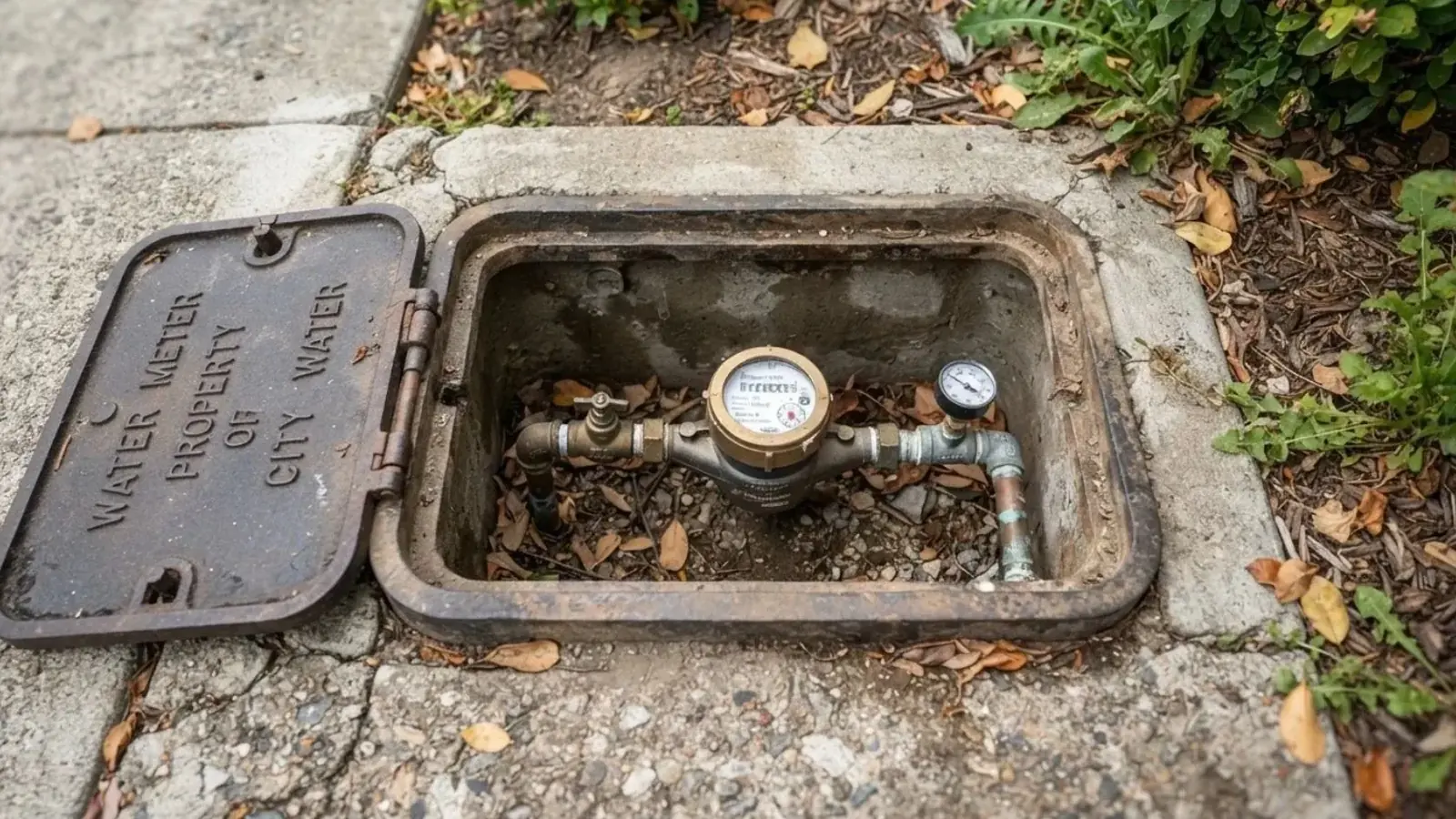
The meter test
You need about fifteen minutes and no tools.
- 1Stop all use. Turn off taps, the dishwasher, washing machine and ice maker. Make sure no one flushes.
- 2Find the meter. It is usually in a box near the street. Lift the lid carefully.
- 3Read the indicator. Most meters have a small triangle or wheel that spins when water flows. Note the reading.
- 4Wait and compare. Wait fifteen minutes without using water and read again.
- 5Interpret. If the indicator moved or the reading changed, water is leaking somewhere.
Start with the toilets
Toilets cause most hidden leaks. A flapper that does not seal lets water trickle from the tank to the bowl, and a fill valve refills the tank without anyone hearing it. Put a few drops of food coloring in each tank, wait ten minutes without flushing and look at the bowl. Color means a leak.
OWASA's water quality report advises chloramine-resistant rubber parts. A worn flapper is the usual reason these leaks start. Our toilet repair page explains the fix.
If the meter keeps moving
These are the next places to look.
| Where | How to check | What it means |
|---|---|---|
| Toilets | Dye test | Flapper or fill valve |
| Outdoor hose bibs and irrigation | Look for drips or wet soil | Valve or line leak |
| Water heater | Look for wet fittings and a dripping discharge pipe | Fitting or valve leak, see repair |
| Between meter and house | Wet patch or sunken ground | See service line repair |
| In walls or slab | Warm spots, hissing, stains | Leak detection |
Who to call
OWASA provides water service in Chapel Hill and Carrboro, reads the meter and sends the bill. If you think the meter itself is wrong or want to understand your usage history, ask OWASA. If you find a leak on your side of the meter, it is yours to fix.
If you are not sure which side it is, close the valve on the house side of the meter. If the indicator stops, the leak is inside your property line. If it keeps moving, the leak is on the street side and OWASA is the right call.
A bill is not always a leak
Guests, a new fixture, a pool fill, irrigation season or a longer billing cycle can raise a bill without any leak. Compare your usage to the same months last year before you panic. If the meter test passes, the bill is probably real use.
Chapel Hill and Carrboro housing notes
Pinhole leaks can show up on supply lines of any age, and long runs and shared walls can hide them, including in Meadowmont and Southern Village. Rental homes near the UNC campus can have fixtures that nobody reports until the bill arrives.
OWASA's report notes that homes built before the 1986 ban on lead solder may have lead solder on copper pipes. A repeated leak pattern in copper is a reason to look at repiping.
When to call a plumber
Call if the meter moves and you cannot find the cause, if you see a wet spot in the yard, a warm spot on the floor or a stain on a ceiling. Hidden leaks cause damage while you search for them. A plumber with listening and thermal tools can narrow it down quickly.
If water is actively pouring out, close the main shutoff and call our 24/7 line. See burst pipe repair.
Reading the meter and your bill
Meters usually show a register that counts gallons or cubic feet, and a leak indicator, often a small triangle or star that spins when any water moves. The units are printed on the dial or the lid, so check which one yours uses before you compare numbers to your bill.
A bill shows usage for a billing period. If one month jumped and the next dropped back, a one-time use, such as filling a pool or watering new sod, is more likely than a leak. If the usage stays high month after month, a hidden leak or a failing fixture is more likely.
Write down the meter reading at night and again in the morning, with no use overnight. A change tells you water moved while you slept. Share the numbers with the plumber, because they help us decide where to start.
Fixing what you find
If the toilet test shows a leak, replace the flapper or fill valve and run the meter test again. If the meter still moves, work through the list above or call us. Keep your OWASA bills and meter readings, since they help a plumber compare before and after. Once the leak is fixed, watch the next bill. It should drop to your normal usage, and if it does not, call so we can look again.
What EPA says about leaks
According to the U.S. EPA, the average household's leaks can waste more than 9,300 gallons per year, and nine percent of homes have leaks that waste 50 gallons or more per day. EPA also recommends the food coloring test for toilets, with ten minutes for color to show in the bowl.
Common questions
It depends on the leak. A small flapper leak can waste a lot over a month. A dye test shows whether it is happening.
Ask OWASA about its policies. We cannot speak for them.
Yes. Our listening and thermal tools locate slab leaks. See leak detection.
Our line is answered 24/7.
Yes. See our Carrboro page and all of our service areas.