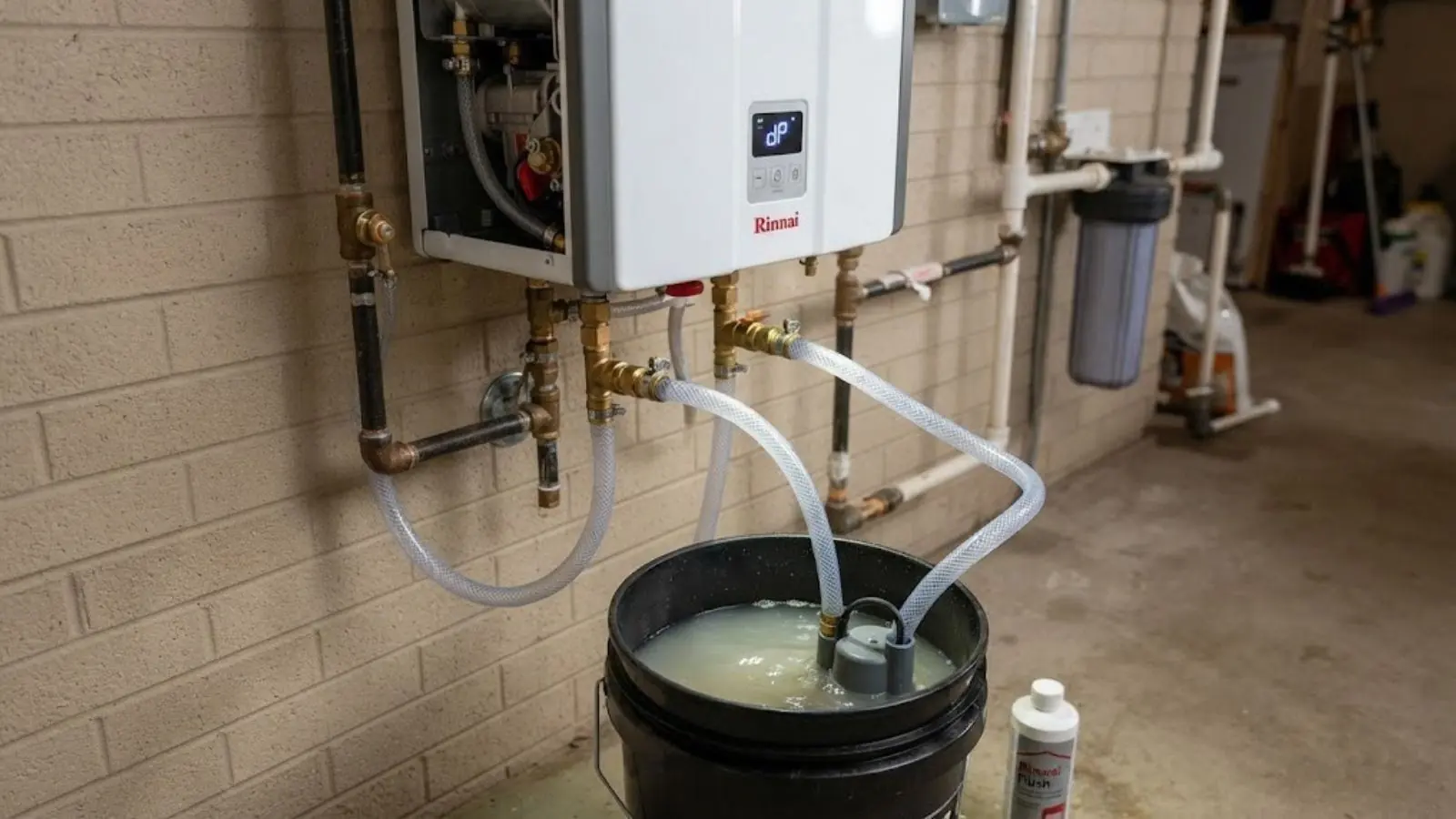
Why tankless units still make you wait
Many people expect tankless to mean instant hot water. It means endless hot water, which is different. When you open a hot tap, cold water in the pipe between the heater and the fixture has to flow out first. A long run to a back bathroom or a second floor can mean a minute of wasted water, and a tankless unit also needs a moment to detect flow and fire up.
Recirculation addresses the pipe delay. It keeps warm water moving or on call so the pipe near the fixture is already warm. It does not change how much hot water the heater can produce.
Recirculation options compared
There are several ways to set up a loop. Each fits a different house.
| Option | How it works | Trade-offs |
|---|---|---|
| Dedicated return line | A separate pipe carries water back to the heater | Best performance, hardest to retrofit |
| Crossover valve at the fixture | A pump uses the cold line as a return | Easier retrofit, warms the cold line briefly |
| Built-in unit buffer | Some tankless models include a small tank and pump | Needs a compatible unit |
| Demand control | A button or sensor starts the pump on request | Saves energy over a timer |
Our tankless water heater page explains what we check before recommending one.
How we decide if recirculation is worth it
We would rather not sell you a pump you will not use.
- 1Measure the wait. We time the delay at your farthest tap and check how many gallons run before hot water arrives.
- 2Trace the piping. A return line, an unfinished crawlspace or an attic run makes some options practical and others not.
- 3Check compatibility. Not every heater works with every loop. The manufacturer's guidance matters.
- 4Explain the trade-offs. You hear what it adds in cost, noise and energy use before you decide.
Energy, noise and wear
A pump that runs all day heats the loop all day, and that costs energy because the pipes lose heat. Timers, sensors and on-demand buttons reduce the cost. A pump also adds a little noise at the moment it runs, and its bearings wear.
In a house with one bathroom close to the heater, recirculation is rarely worth it. In a two-story house with the heater in a garage or crawlspace, it can be a real quality-of-life upgrade.
Chapel Hill homes and recirculation
Meadowmont and Southern Village homes are often two or three stories with mechanical closets on one floor, so the farthest bath can sit a long way from the heater. Older homes near the historic districts may have crawlspaces and mixed piping that make a return line difficult. We look at the actual pipe routes before we quote.
OWASA's water quality report advises chloramine-resistant rubber parts, and a recirculation pump adds gaskets and fittings. We use rated parts and keep the install tight. Water heater work in Chapel Hill falls under the town's Trade Work permit, so we pull the permit when the job requires one.
A note on water savings
Recirculation can save the gallons you would pour down the drain while waiting. In a household that waits several times a day, that adds up. We do not claim a specific saving because it depends on your pipe volume and habits.
What to ask before you buy
Ask whether the heater has a built-in recirculation mode and what the manufacturer requires. Ask where the pump will be and how it will be powered. Ask whether the system uses a timer, a sensor or a button, and whether you can change that later.
If you are replacing an older tank with a tankless unit and want recirculation in the same project, tell us at the start. It is easier to plan the loop when the wall and the gas line are open. See water heater replacement for how we plan a swap.
What an installation visit looks like
A recirculation install starts with the pump location. The pump usually mounts near the heater on the hot outlet or on a return line, and it needs power. A crossover valve under the farthest sink connects hot and cold so the pump can move warm water through the cold line back to the heater.
We drain the affected lines, install the pump and valves, restore water and bleed the air. Then we set the timer or sensor and time how long hot water takes to reach the farthest fixture. You should see a real difference in the wait, and if the result is not what we described, we want to know.
A system with a crossover valve will leave the cold line slightly warm at that fixture for a short time. Some people notice it and some do not. We explain it before you decide so that nothing surprises you.
Parts and materials to ask about
Pumps, valves and fittings that carry drinking water should be certified to NSF/ANSI 61, the standard for products in contact with potable water. Ask any installer to show you the certification on the pump and the valves, and to follow the heater manufacturer's installation instructions for any recirculation setup.
Common questions
No. It gives continuous hot water. The delay at the tap comes from cooled water in the pipe, which recirculation addresses.
Often yes, but it depends on the unit and the piping. We check before we promise.
It can. Timers and on-demand controls keep the cost lower.
The town lists water heater and plumbing alterations under its Trade Work permit. We confirm what applies to your address.
Yes. See our Carrboro page and all of our service areas.