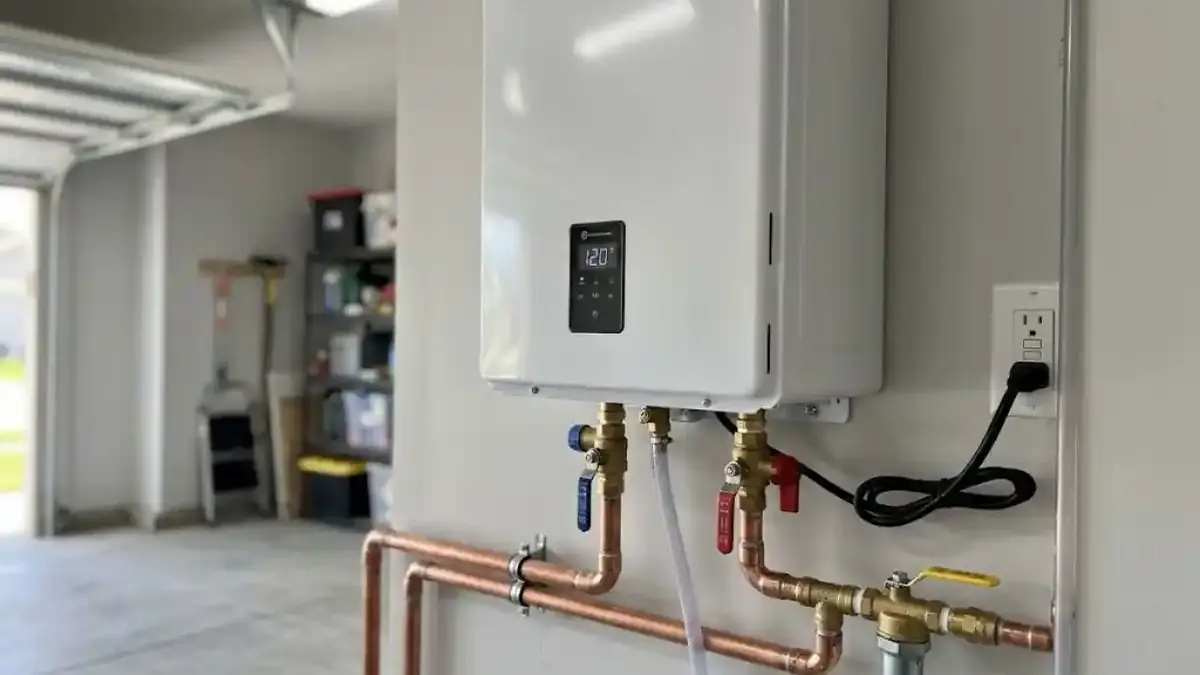
How a tankless water heater works
A tank heater keeps dozens of gallons hot all day. A tankless unit stays idle until you open a hot tap, then a flow sensor starts the burner or the electric elements and the water is heated on its way through. Hot water lasts as long as the unit can keep up with the flow, which is why sizing matters more than it does with a tank.
The catch is capacity. Every tankless unit has a maximum temperature rise at a given flow rate. A shower, a dishwasher and a washing machine running together can ask for more than a small unit can deliver, and the water cools. We size the unit to your busiest hour, not your average one.
Tank or tankless: how the two compare
Neither type wins in every house. This comparison shows where each tends to fit.
| Factor | Tank heater | Tankless heater |
|---|---|---|
| Hot water supply | Limited by tank size, then recovery time | Continuous while the flow stays within capacity |
| Space | Needs a floor footprint and a pan | Wall mounted, small footprint |
| Venting and gas | Often reuses the existing flue and gas line | May need larger gas line and special venting |
| Upfront cost | Lower | Higher, with more installation work |
| Maintenance | Anode rod and sediment flush | Scale flush on the manufacturer's schedule |
If your current heater is failing and you want to compare costs, our water heater replacement page covers the like-for-like swap.
What we check before we quote
Tankless jobs go wrong when the home was never checked first. We look at the gas meter and line size, the vent route to the outside, the electrical capacity for an electric unit and the condensate drain for a high-efficiency model. We also count fixtures and ask how many can run at once.
Chapel Hill lists water heater work under its Trade Work permit, so a swap to tankless is not a no-permit job. We pull the permit where it is required and schedule the inspection.
Tankless repair: common symptoms
Tankless units fail in recognizable ways. Match what you see to the likely cause.
Cold water sandwich
A burst of cold water between hot bursts often points to a flow sensor or a short draw below the minimum flow.
Error code on the display
Codes usually name the failed part or a venting or gas problem. Write the code down before you call.
Lukewarm water and a long delay
Scale on the heat exchanger or a clogged inlet filter slows heat transfer.
Banging or kettle-like noises
Mineral buildup boiling inside the exchanger. A flush usually helps.
What a descaling flush involves
A flush is routine maintenance that keeps the heat exchanger from scaling. It is also a good first step on a unit that has gone lukewarm.
- 1Isolate the unit. We shut off water, gas or power and close the service valves.
- 2Circulate cleaning solution. A small pump moves a descaling solution through the exchanger for the time the manufacturer specifies.
- 3Rinse and clean filters. We flush with fresh water and clean the inlet screen.
- 4Test and record. We restart the unit, check temperature and flow and note the result.
Follow the manufacturer's schedule for flushing. Your manual states how often.
Chapel Hill notes for tankless owners
OWASA treats water with chloramine most of the year. That is safe to drink, but it is a reminder to use chloramine-resistant rubber parts on connectors and valves around any water heater. OWASA does not publish a hardness figure in its report, so we do not guess how fast scale builds in your unit. A flush check after the first year tells you more than a number could.
Meadowmont and Southern Village homes tend to have tight mechanical closets, and venting a tankless unit there can decide the whole project. Older Chapel Hill homes may need a new gas branch or a larger electrical feed.
Hot water recirculation with tankless
Tankless heaters do not remove the wait for hot water to reach a faraway tap. A recirculation pump and return line, or a built-in recirculation feature on some models, keeps warm water moving so the tap runs hot sooner. We explain how it is done, where the pump goes and whether your plumbing can take it.
Recirculation adds cost and some energy use, so we ask whether the wait is a real annoyance or a minor one before recommending it.
What affects a tankless price
We quote a clear price before work starts. These are the factors that move it most.
Homeowners insurance does not cover the cost of upgrading a working heater, so treat tankless as a planned project.
Electrical and gas references for tankless units
Electric tankless units draw heavy current, and wiring them falls under the National Electrical Code (NEC). Gas tankless units follow the manufacturer's instructions for gas supply and vent materials, along with the fuel gas code adopted in North Carolina.
Those references are why we check the panel and the gas meter before quoting. The unit is only part of the job.
Want a tankless quote?
Call with your fuel type, bathroom count and the location of the old tank. We will tell you what to expect before a visit.
Common questions
It can be if you have the space limits, the gas or electrical capacity and a hot water habit that tank recovery cannot meet. If the home needs a major gas or venting change, a tank may be the better value. We will show both options.
Yes. Our 24/7 line takes calls any time. A tankless unit that shows an error code and gives no hot water is worth a call, and we offer same-day appointments when available.
Follow the schedule in the manufacturer's manual. OWASA's report does not list a hardness number, so we cannot give a local interval. A flush check after the first year tells us how your water behaves.
Sometimes. Tankless burners draw more gas at once than a tank burner, so we measure the meter and line size before we promise anything.
The Town of Chapel Hill lists water heater installation under its Trade Work permit. We handle the permit and inspection scheduling where it applies. Carrboro addresses use the Town of Carrboro's inspections office instead.