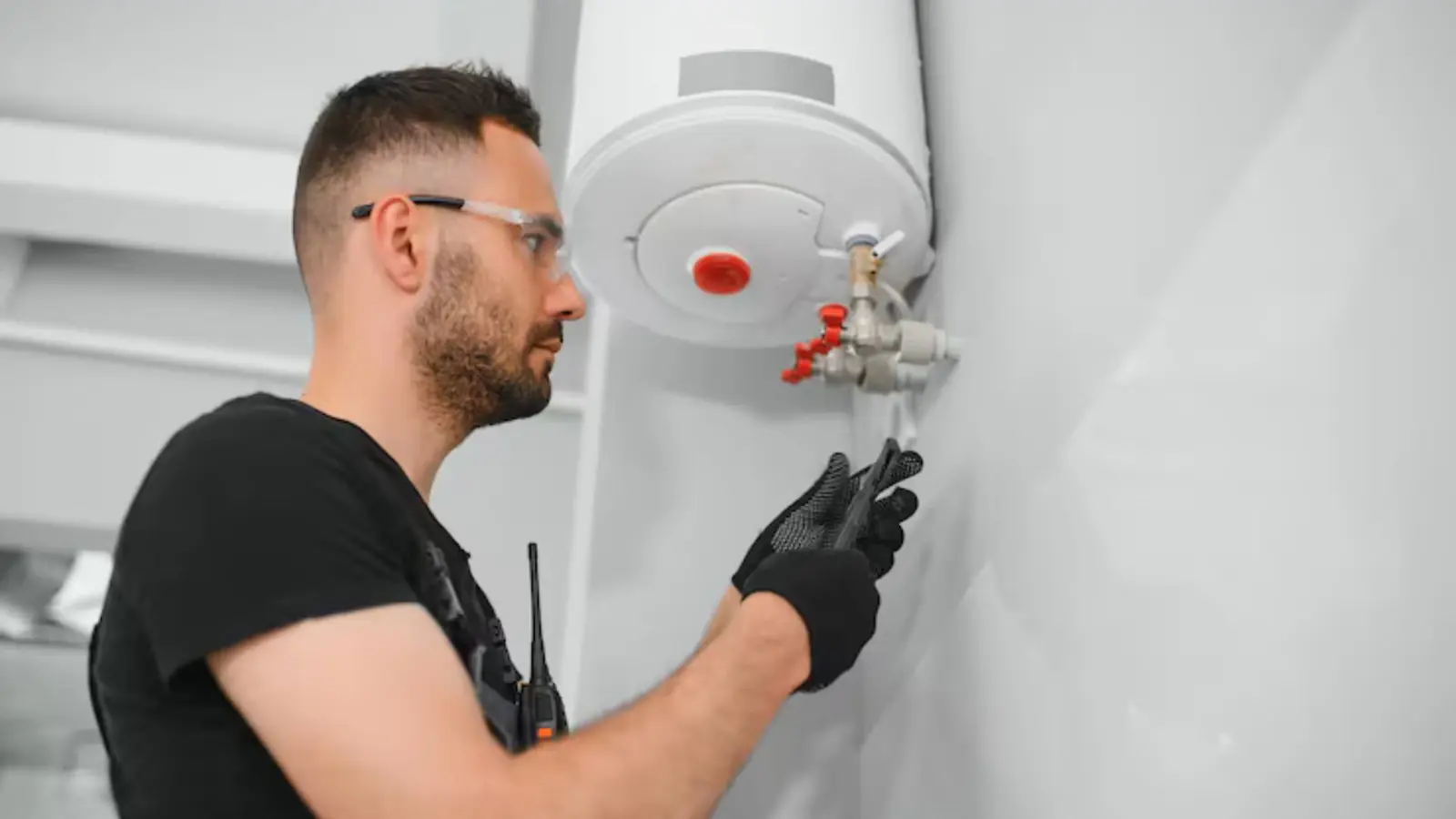
What the relief valve does
A water heater heats water in a closed tank. Heated water expands, and if the thermostat fails the temperature and pressure can keep rising. The temperature and pressure relief valve, usually called the T&P valve, is the last line of defense. It opens before the tank can build dangerous pressure and sends water down a discharge pipe.
Most residential valves are set to open at 150 psi or 210 degrees Fahrenheit. You will see a small brass valve on the side or top of the tank with a lever and a pipe running down from it. That pipe should end a few inches above the floor or run to a safe drain. It should never be capped or threaded shut.
Signs the valve needs replacing
A valve that is doing its job rarely announces itself. A failing one usually does.
Steady drip or trickle
A weeping valve often means a worn seat or mineral deposits. Dripping is not normal.
Lever will not move
A valve that is frozen with scale cannot open in an emergency.
Green or white crust
Corrosion around the valve body points to chronic leaking.
Water at the discharge pipe
A pipe that shows water means the valve is opening, and you need to know why.
How to test the valve safely
Manufacturers generally advise testing the valve at least once a year. Do it carefully, because the water that comes out is hot.
- 1Check the discharge pipe. Make sure it runs down to a safe spot and a bucket or drain will catch the water.
- 2Lift the lever briefly. Raise it for a second or two and let it snap back. Water should flow and then stop.
- 3Watch for drips. If water keeps dripping after you let go, the valve may not be seating.
- 4Stop if it sticks. If the lever will not move or the valve will not close, do not force it. Close the cold supply and call a plumber.
Keep your face and hands away from the discharge. Hot water can scald.
Why a valve drips: the valve or the system
A leaking valve is sometimes the valve and sometimes a sign of a larger problem. If your house has a check valve or a pressure reducing valve on the incoming line, heated water has nowhere to expand. The pressure rises each time the heater cycles and the relief valve opens to release it. Replacing the valve alone does not fix that.
The fix is a thermal expansion tank, a small tank that absorbs the expanding water. We check the static pressure and the expansion tank when we replace a relief valve. Our water heater repair page explains how we diagnose a leaking tank and valve.
Valve problem or something else
Not every wet spot at the tank is the relief valve.
| What you see | Likely source | Next step |
|---|---|---|
| Drip from the discharge pipe | T&P valve or high pressure | Test pressure, replace valve, check expansion tank |
| Water at the base of the tank | Tank leak or fitting | See replacement |
| Water at the top connections | Loose or corroded fittings | Tighten or replace connectors |
| Hot water pouring from the pipe | Overheating | Turn off the heater and call right away |
What this means in Chapel Hill and Carrboro
The Town of Chapel Hill lists the installation, extension, repair or alteration of plumbing systems, including water heaters, under its Trade Work permit. Replacing only a relief valve is a small repair, but if the work grows into a heater swap, a permit may apply. Carrboro addresses use the Town of Carrboro's inspections office.
OWASA's water quality report advises using rubber parts that resist chloramine. The valve itself is brass, but its seat and the flexible connectors near it are exactly the kind of parts that age, so replace them at the same time.
When to call immediately
If the discharge pipe is spewing steam or very hot water, or the tank is rumbling, shut off the fuel or power if you can do so safely, leave the area and call us on our 24/7 line. If you smell gas near the heater, call the gas utility or 911 from outside.
What a replacement visit includes
A plumber closes the cold supply, relieves pressure, drains a few gallons, removes the old valve and installs a new one with the correct rating and thread. The discharge pipe is checked for the right material and run. We then restore water, check for leaks and measure the incoming pressure.
If the tank is old or the valve has been leaking for months, we also look at the tank for corrosion. A tank near the end of its life is sometimes better replaced than repaired. Our water heater installation page covers the planning side.
A yearly water heater checkup that takes ten minutes
The valve is one part of a short annual routine. Test the relief valve as described above. Look at the discharge pipe for staining or mineral trails, which show past leaks. Check the connectors and the shutoff valve at the top of the tank for corrosion, and look at the floor or the pan for water.
Draining a few gallons from the drain valve at the bottom of the tank flushes out some sediment, which can shorten the life of the tank and make a gas burner or an electric element work harder. If the water that comes out is full of grit or the drain valve clogs, the tank may have a lot of sediment and deserves a closer look. Check your manual for the manufacturer's advice.
A tank that is more than a decade old and has begun to show rust at the seams is a candidate for replacement rather than more repairs. If you reach that point, our water heater replacement page explains what we recommend and how we plan the swap.
Standards behind the valve
Relief valves for water heaters are made to the ANSI Z21.22 standard, and the International Plumbing Code (IPC), which the North Carolina Plumbing Code follows, expects a discharge pipe routed to a safe location. Choose a replacement valve with the same pressure and temperature ratings as the old one, and the tank's data plate tells you what they are.
Common questions
There is no fixed life. They can last many years, but they can also seize with scale. That is why annual testing matters.
It is possible for a skilled homeowner, but it involves hot water, pressure and gas or electric safety. If you are unsure, call a plumber.
A small drip is not an emergency, but it needs attention soon. Hot water or steam from the pipe is an emergency. Our line is answered 24/7.
OWASA uses chloramine most of the year, and it advises using chloramine-resistant rubber parts. That is why we replace connectors and gaskets with the valve.
Yes. See our Carrboro page for neighborhoods and ZIP codes.