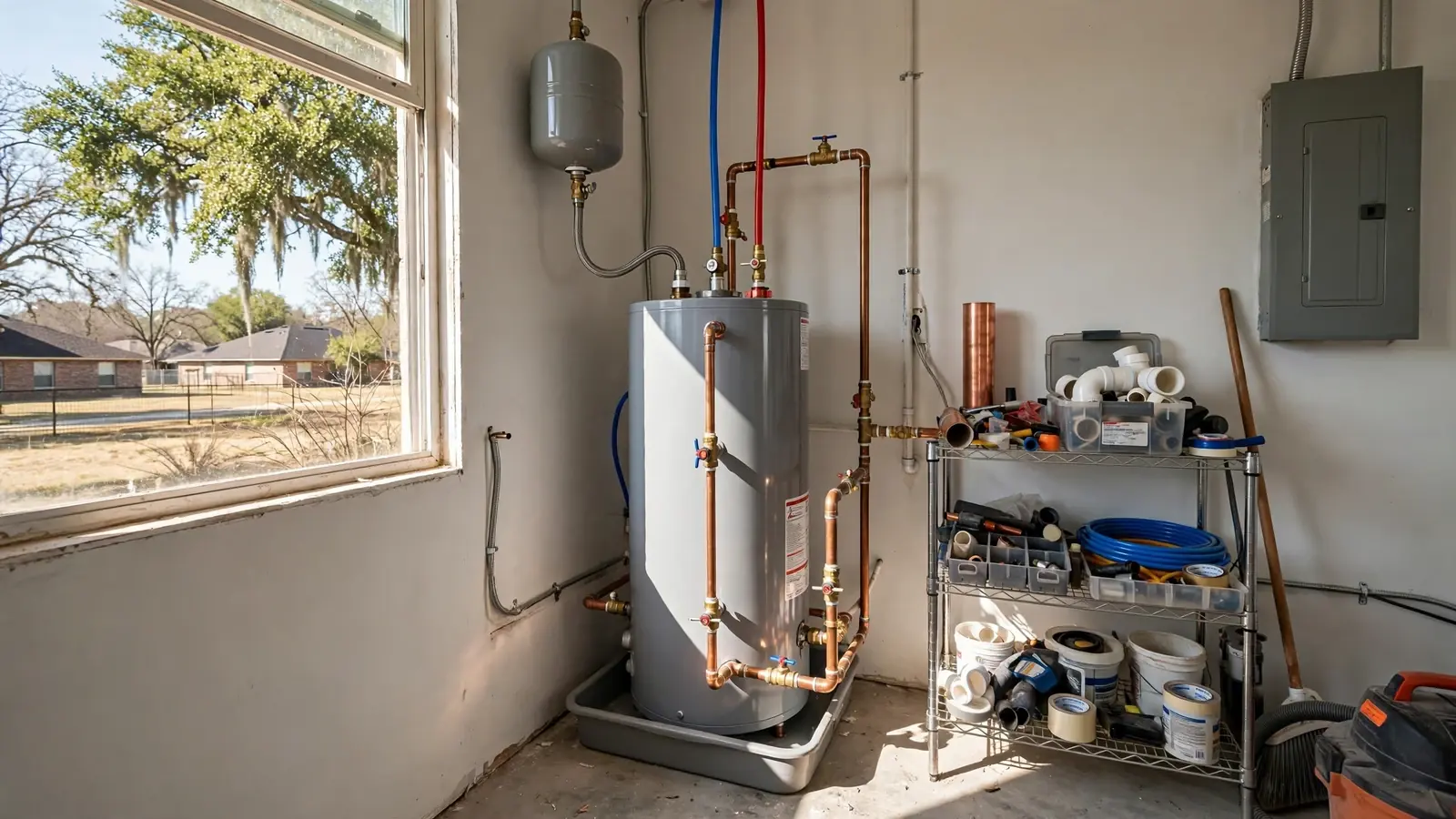
A planned install is easier than an emergency swap
Most water heater installs begin with a failing tank, but a planned project gives you room to choose. You can pick the fuel, size the tank to the household and decide whether a drain pan, a new expansion tank or a better venting route is worth doing at the same time. If your current heater is already leaking, our replacement page covers the faster path.
Planned installs fit three situations. The first is a remodel or addition that needs a second heater. The second is a fuel change, such as moving from electric to gas or adding a heat pump unit. The third is a new build or a gut renovation where the plumbing is open and the water heater can be located for the best run.
How installation works
A clean install follows the same order every time. Here is what happens at each stage.
- 1Survey the space. We measure clearances, check the vent route and look at the gas, electrical and water connections.
- 2Size the unit. We match capacity to the household's morning peak, not to a rule of thumb.
- 3Permit and schedule. We pull the trade permit where the jurisdiction requires one and plan the inspection.
- 4Install and connect. Pan, relief valve, discharge line, expansion tank where needed, and the correct connectors go in.
- 5Test and walk through. We check for leaks, verify gas or electrical operation and show you the shutoffs.
Expansion tanks, pans and discharge lines
Three small items decide whether an installation holds up over time.
Thermal expansion tank
When a home has a check valve or backflow device on the water service, heated water has nowhere to expand. A small expansion tank absorbs the pressure rise. OWASA's report reminds customers that backflow protection devices must be tested annually, which is a good reminder to look at your whole system when you add a heater.
Drain pan
A pan with a drain line catches slow leaks in finished spaces, closets and attics. If the heater sits over a floor you care about, ask for one.
Relief valve discharge
The relief valve must discharge through a pipe to a safe location. We route it to code and check that nothing downstream can trap water.
Fuel options at a glance
Which fuel makes sense depends on what the house already has and what you can easily add.
| Fuel | Good fit | Watch for |
|---|---|---|
| Natural gas | Homes with an existing gas line and a vent route | Combustion air, flue condition and a gas connector |
| Electric tank | Homes without gas service | A properly sized circuit and breaker |
| Hybrid heat pump | Garage or basement with open air space | Cooler exhaust air, noise and a condensate drain |
| Tankless gas or electric | Households that want continuous supply | Venting, gas line size or heavy electrical load |
Local rules and utility notes
The Town of Chapel Hill's Trade Work permit covers the installation, extension, repair or alteration of any plumbing system, with water heaters listed as an example. Applications go through the town's online permit portal, and inspections are booked individually by phone or through the permit center. If your home is in Carrboro, the Town of Carrboro Inspections Division handles inspections, so contact them for the process at your address.
North Carolina requires plumbing contractors to hold a license from the State Board of Examiners of Plumbing, Heating and Fire Sprinkler Contractors. You can verify any plumber's license through the board's online license search, and we encourage you to do that with anyone you hire.
What drives installation pricing
We give a clear price before work starts, and we list upgrades separately so you can accept or skip them.
Planned installs are usually not insurance claims. If you are replacing a unit that damaged the home, ask your insurer whether the water damage portion is covered.
Gas, venting and electrical references
New water heater installs follow the manufacturer's instructions and the state code. Gas units are connected and vented under the North Carolina fuel gas code, which is based on the International Fuel Gas Code. Electric units are wired under the National Electrical Code (NEC), and a licensed electrician handles any new circuit.
We tell you early if your project needs a second trade, so the schedule does not surprise you.
Want a plan before you commit?
Call and we will walk through the options and give a clear price before work starts.
Common questions
A like-for-like tank swap commonly takes part of a day. Conversions and tankless projects take longer because of venting, gas or electrical work. We give a realistic window when we quote.
If your home has a closed system, such as a check valve or backflow device on the service line, the answer is often yes. We test the incoming pressure and tell you.
Yes, with the right pan, drain line and access. Cramped spaces take more time and can raise the price.
Clear a path to the unit, move stored items away from the heater and make sure the water shutoff valve is reachable. Make arrangements for an adult to be home if an inspection is needed.
Yes. If your tank has failed, see our water heater repair page for diagnostic steps. The 24/7 line can also schedule a same-day install when available.
Yes. The Carrboro page has coverage details.