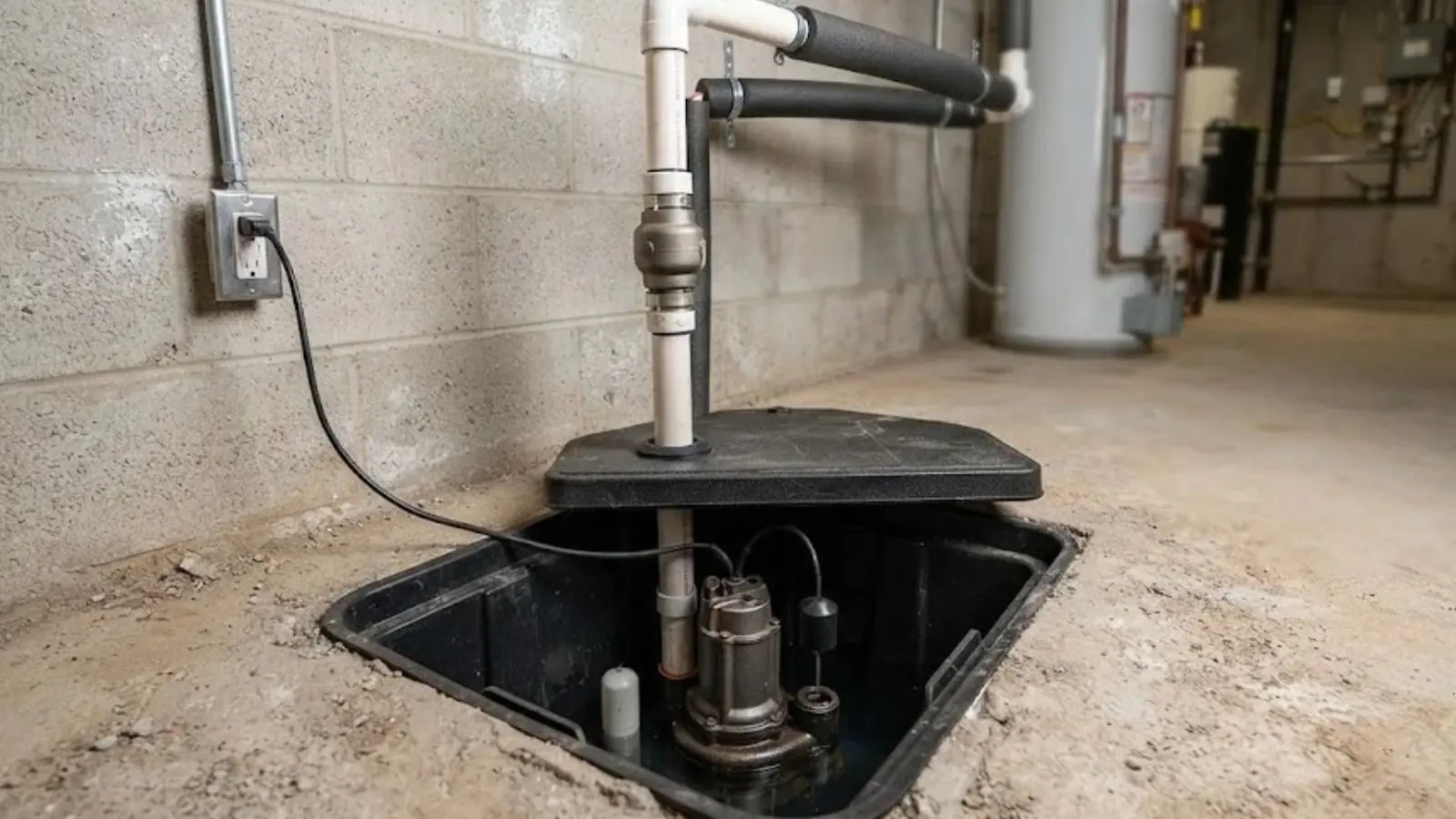
If the pump is failing during a storm
A pump that has stopped while water is rising needs a fast response. Do these things while help is on the way.
- 1Check whether the pump is plugged in and the GFCI outlet has not tripped.
- 2Look at the float. If it is stuck against the side of the pit, free it gently.
- 3If water is nearing the floor, move stored items and electronics up.
- 4If you have a portable pump or a wet vacuum rated for water, use it to buy time.
- 5Call us. Tell us whether the pump hums, runs without moving water or is silent.
Sump pump failures and what they mean
Most failures come from a short list of causes.
| Symptom | Likely cause | Fix |
|---|---|---|
| Silent | No power, tripped GFCI or dead motor | Restore power or replace pump |
| Hums but no flow | Stuck impeller or clogged intake | Clean or replace |
| Runs constantly | Stuck float or failed check valve | Reset or replace |
| Runs but water returns | Missing check valve or frozen or blocked discharge | Repair the discharge |
| Loud rattle | Debris in the impeller or worn bearings | Clean or replace |
Why pumps fail
Pumps are mechanical devices that sit idle for months and are expected to work in a storm. Float switches stick, check valves clog, impellers jam with grit and motors wear. Most sump pumps are not designed to last forever, and an old one deserves a test before the rainy season.
A simple test is to pour a bucket of water in the pit and watch the pump start, move the water and shut off. If it hesitates, we can look at it.
Why Chapel Hill homes get wet crawlspaces
Bolin Creek, Morgan Creek and their tributaries run through Chapel Hill and Carrboro, and heavy rain moves quickly over paved and sloped ground. Tropical Storm Chantal in July 2025 flooded neighborhoods in Carrboro and Chapel Hill. A 2013 storm that dropped more than five inches of rain in a few hours flooded parts of Carrboro, according to Chapelboro.
Most homes will not see flooding like that. Many do see damp crawlspaces and basements after long rains. A working pump, a clear discharge line and a backup are the practical answers.
How we install or replace a pump
A new pump is only as good as the pit and discharge around it.
- 1Inspect the pit. We check the size, the liner and the inlet.
- 2Set the pump. A pump on a solid base, with a float that moves freely, is the start.
- 3Fit check valve and discharge. A check valve keeps pumped water from running back, and the discharge sends water well away from the foundation.
- 4Add backup. A battery or water-powered backup pump can run when the power fails.
- 5Test. We fill the pit, run the cycle and watch the discharge.
Discharge and drainage rules
Where the pump sends water matters. Do not discharge to the sanitary sewer. Water from a sump pump belongs outside, away from the foundation and not onto a neighbor's property. Carrboro's stormwater office and the Town of Chapel Hill handle stormwater questions, so check with them if you are unsure where your discharge can go.
If water in a crawlspace is not coming from the ground but from a leaking pipe, a pump will not fix it. Our leak detection page explains how we tell the difference.
What affects sump pump prices
We quote a clear price before work starts.
Standard homeowners policies often exclude water that comes up from the ground or backs up through a sump unless you add an endorsement. Ask your agent before the storm.
Flood coverage and the National Flood Insurance Program
Standard homeowners policies usually exclude flood. FEMA's National Flood Insurance Program (NFIP) is a separate policy, and it generally has a waiting period before coverage starts, so a policy bought after a storm warning will not help with that storm.
A pump reduces the chance of damage. It does not replace the right coverage, and we are plumbers, not insurance advisers, so ask your agent for specifics.
Pump down in a storm?
Call now. Our 24/7 line is open.
Common questions
Our line is answered 24/7. In a storm, call as early as you can, because dispatch depends on crew location and call volume.
Pour a bucket of water into the pit. The pump should start, move the water out and shut off. If it does not, call.
If your power goes out during storms, a backup keeps the pit from overflowing. We explain the options.
No. A pump removes water that collects. Waterproofing tries to keep water out. See basement waterproofing.
Yes. See our Carrboro page.