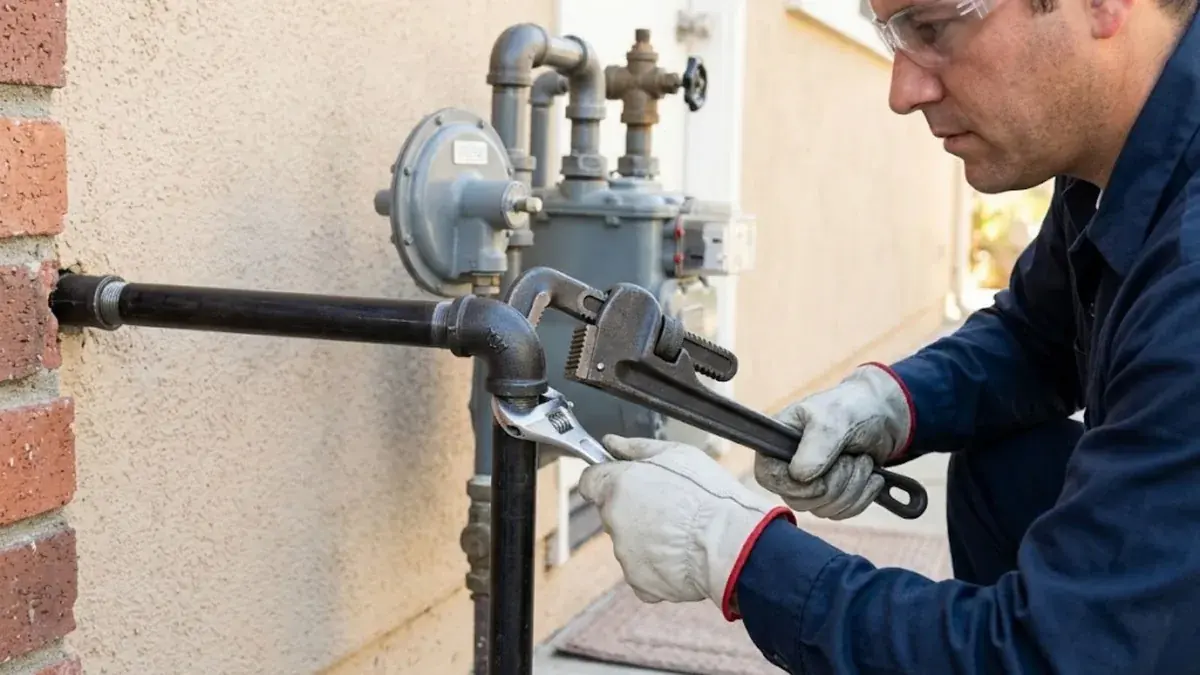
What to do if you smell gas right now
The smell of rotten eggs or sulfur near a gas appliance is a warning. Utilities add a chemical to natural gas so you can notice a leak. Do not wait to be sure.
- 1Leave the building immediately with everyone inside, including pets.
- 2Do not flip light switches, use a phone inside, light a flame or start a car in an attached garage.
- 3Call 911 or the gas utility from outside, at a neighbor's house or from your car.
- 4Do not go back in until the utility or fire department says it is safe.
- 5Call a licensed plumber or gas contractor only after the leak has been cleared.
What a CO detector does
Carbon monoxide has no color and no smell. It comes from fuel that does not burn completely, such as a gas water heater with poor venting, a furnace with a cracked heat exchanger, a stove used for heat or a car left running in an attached garage. A CO detector senses the gas itself and sounds an alarm at defined levels over time.
It does not sense methane, the main component of natural gas, because that is a different chemical. A detector may stay silent while a gas leak builds up in a room. Natural gas detectors exist as separate units or as combination devices, and the label tells you what each one senses.
CO versus natural gas
These are two different problems with different protections.
| Hazard | Source | Detected by |
|---|---|---|
| Carbon monoxide | Incomplete burning | CO detector |
| Natural gas leak | Cracked line, loose fitting, pilot out | Natural gas detector or the added odor |
| Propane leak | Cylinder, regulator, line | Propane detector placed low |
Where plumbers come in
A plumber is often the first person who sees a problem with a gas water heater. Poor venting, a disconnected flue, soot around the burner chamber and a flame that is yellow instead of blue all raise the risk of carbon monoxide. We check venting and combustion air when we install or service a gas water heater, as covered on our water heater installation page.
Gas pipe sizing and new gas lines for appliances are separate work that may require a specific license and a permit. We tell you when a job goes beyond what we do and who to call.
A simple safety routine for your home
These habits reduce the risk of both problems.
- 1Place CO detectors. Put one near sleeping areas and on each level, following the manufacturer's directions.
- 2Test them monthly. Press the test button and replace batteries as needed. Replace the unit when it reaches its end-of-life date.
- 3Know your fuel. If you have gas appliances, consider a natural gas detector as well.
- 4Service appliances. Have fuel-burning appliances checked for venting problems.
- 5Know the exit plan. Practice leaving the house and agree on a place to meet outside.
Local resources in Chapel Hill and Carrboro
Check the current North Carolina requirements for CO alarms in homes with fuel-burning appliances, since rules apply to certain residences and change. The Town of Chapel Hill and the fire department can answer questions about local safety programs. If you rent, your landlord is responsible for working smoke and CO alarms where the law requires them.
Electric water heaters do not burn fuel and do not produce carbon monoxide. If you are deciding between gas and electric for a replacement, see water heater replacement for how we compare them.
Signs of carbon monoxide poisoning
Headache, dizziness, nausea and confusion that improve when you leave the house can signal carbon monoxide. If you suspect it, get everyone outside to fresh air and call 911. We are plumbers, not doctors, so for health questions talk to a physician.
Which appliances produce carbon monoxide
Any appliance that burns fuel can produce carbon monoxide if it is not working or venting correctly. Gas and oil furnaces, gas water heaters, gas dryers, gas ranges and ovens, fireplaces and wood stoves, space heaters that burn fuel, portable generators and cars all qualify. Electric appliances do not.
Most trouble comes from blocked or disconnected vents, cracked heat exchangers and using a generator or a grill in a garage or near a window. A water heater that backdrafts, which means exhaust spills into the room instead of going up the flue, is a classic cause. A flame that looks yellow or orange instead of blue, soot around the burner and a pilot that keeps going out are signs worth a service call.
If you rent, report a problem with an appliance to the landlord in writing. If you own, have fuel-burning equipment inspected on a schedule that fits its type and age.
What the CDC says about carbon monoxide
According to the Centers for Disease Control and Prevention (CDC), carbon monoxide detectors should be placed in the home and checked or replaced as the manufacturer directs, and fuel-burning appliances should be serviced regularly. The CDC also lists headache, dizziness, weakness, nausea and confusion among the symptoms of carbon monoxide poisoning.
Common questions
No. It senses carbon monoxide only. Natural gas needs a separate detector.
Get everyone outside and call 911. Do not go back in until it is cleared.
Utilities add an odor to natural gas, but some people cannot smell it well and the odor can fade. Treat any suspicion seriously.
Yes. See water heater repair. If you smell gas, leave and call the gas utility or 911 first.
Yes. See our Carrboro page and all of our service areas.