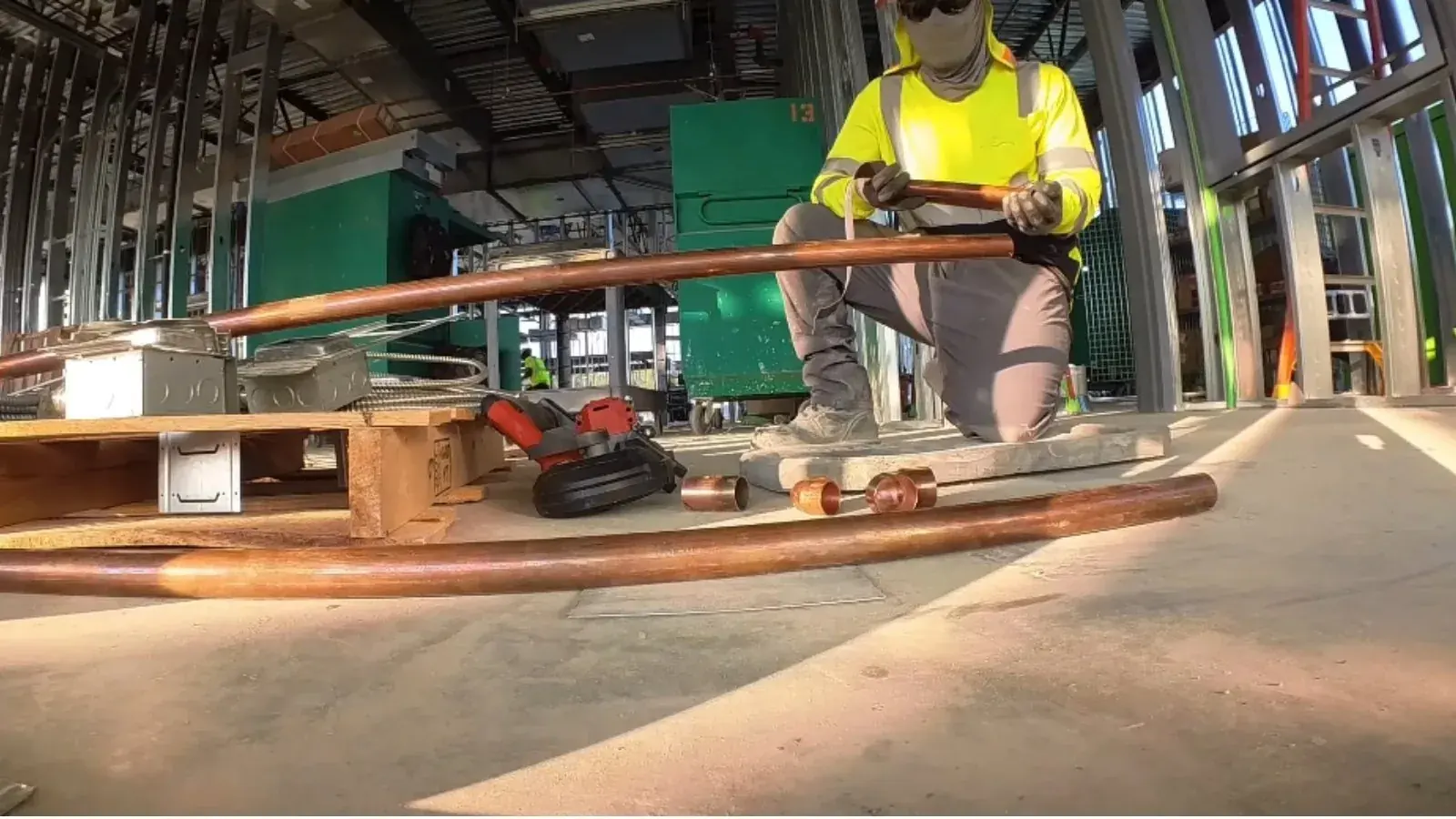
What plumbing installation covers
Installation includes setting fixtures like sinks, tubs, showers, toilets and faucets, running new supply and drain lines, venting drains and connecting appliances like dishwashers, ice makers, washing machines and water heaters. It also covers rough-in, which is the pipework inside walls and floors before the finish surfaces go on.
Rough-in is the part that cannot be changed easily later. Mistakes in location, slope or venting show up as slow drains and bad smells.
Common installation projects
Here is what each kind of project involves.
| Project | What the plumber does | Related work |
|---|---|---|
| New bathroom | Rough in supply, drain and vent, set fixtures | Permit and inspection |
| Kitchen remodel | Move sink and dishwasher lines, add disposal | Disposal hookup |
| Basement bath | Possibly an ejector pump | Pump work |
| Laundry hookup | Supply, drain and standpipe | Appliance shutoffs |
| Water heater swap | Relocate or upsize | Water heater installation |
Sink plumbing rough-in basics
A sink needs a hot and cold supply with shutoff valves, a drain with a trap and a vent so the drain flows freely. The standard method is to set the drain and supply outlets at heights and distances that match the cabinet and fixture, then test before the wall is closed.
If you are planning a kitchen sink with a disposal and dishwasher, tell us before drywall goes up. A disposal needs power and a dishwasher needs a drain connection. A wall that is closed in the wrong place is expensive to open.
Gas lines and carbon monoxide safety
Gas appliances such as water heaters, ranges and furnaces need correct piping, venting and combustion air. We install and connect water heater gas lines and check venting for appliances we install. Larger gas line work for new appliances or new service is a separate job that may need a gas contractor and its own permit, and we say so when that applies.
A carbon monoxide detector does not detect natural gas leaks. It senses carbon monoxide from incomplete combustion. A gas leak needs a separate natural gas detector or your nose. If you smell gas, leave the house and call the gas utility or 911 from outside.
How an installation project runs
Good planning shortens the job.
- 1Scope visit. We look at the space, measure and talk through fixtures.
- 2Rough-in. We install lines and vents and set boxes and valves.
- 3Inspection. Where a permit is required, the inspector checks the rough-in before walls close.
- 4Set fixtures. After finishes, we set fixtures, connect water and test.
- 5Final inspection. A final check and test closes the permit.
What to do before we arrive for an installation
A little preparation makes the first visit shorter and safer for everyone in the house.
- ✓Clear the work area, including the cabinet under the sink or the floor around the fixture.
- ✓Find the main water shutoff and make sure you can reach it.
- ✓Keep children and pets out of the room while we work.
- ✓Tell us about any gas appliance nearby, and leave the house and call the gas utility if you smell gas.
- ✓Have the fixtures, appliances or model numbers ready so we can check rough-in dimensions.
Permits and remodels in Chapel Hill and Carrboro
The Town of Chapel Hill lists the installation, extension, repair or alteration of any plumbing system under its Trade Work permit, and Carrboro handles permits through its own office. North Carolina licenses plumbing contractors through the State Board of Examiners of Plumbing, Heating and Fire Sprinkler Contractors, and its license search lets you confirm any plumber.
Older houses around the historic districts and newer village homes both get remodeled. The difference is what is behind the wall. Older walls can hold surprises like galvanized lines or unvented drains, and we tell you when something has to change to meet code.
What affects installation prices
We quote a clear price before work starts.
Remodel plumbing is a planned cost, not an insurance matter.
The code behind every rough-in
Installations follow the North Carolina Plumbing Code, which is built on the International Plumbing Code (IPC) with state amendments. It sets the sizes, slopes, vent distances and test requirements that an inspector checks before walls close.
That is why we ask for fixture choices early. The code decides where pipes may go, and the fixture decides where they must go.
Planning plumbing work?
Call and describe the project. We will tell you what to expect.
Common questions
Yes. We handle rough-in and fixtures for kitchens, baths and laundry, and we coordinate with your contractor.
A flange at the right height, a wax ring or seal, bolts, a supply line and a shutoff valve. Check the rough-in distance before buying. Our toilet repair page has more.
Often yes. Chapel Hill lists plumbing system installation and alteration under its Trade Work permit. Carrboro has its own office. We tell you what applies to your address.
Our line is answered 24/7 and we offer same-day appointments when available.
Yes. See our Carrboro page.