If it is overflowing right now
Stop the water before you try to clear anything.
- 1Remove the tank lid and push the flapper down, or turn the shutoff valve behind the toilet clockwise.
- 2Do not flush again.
- 3Put towels down and keep people and pets out of the wastewater.
- 4Wait for the bowl to settle before plunging.
- 5If sewage is rising in a tub or floor drain, stop using water and call us.
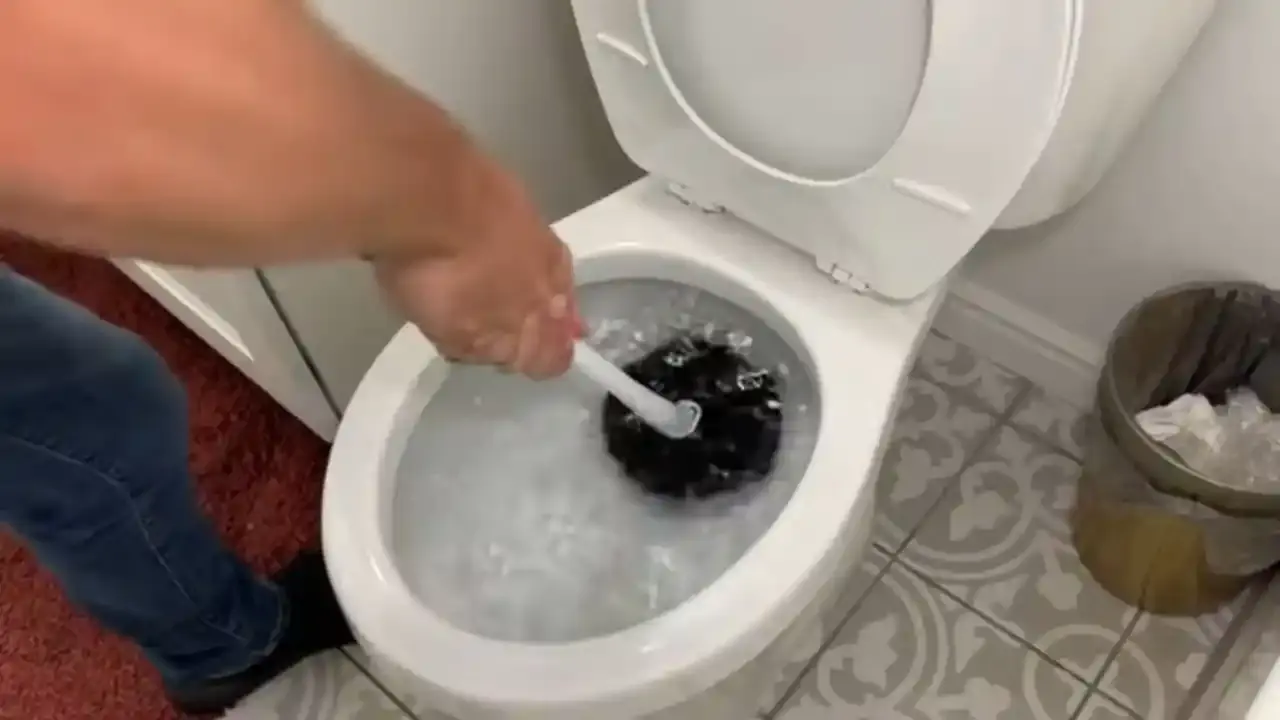
How to plunge a toilet properly
Technique matters more than force.
- 1Use a flange plunger. It has a rubber lip that fits into the drain. A flat cup plunger is for sinks.
- 2Cover the opening. The bowl should have enough water to cover the plunger. Add water if it is low.
- 3Seal and push gently. Press down slowly to avoid splashing, then pull up sharply.
- 4Repeat in sets. Do ten or more strokes, then see whether the water drops.
- 5Test with a flush. Flush once. If the bowl rises, close the shutoff and try again.
Skip chemical drain cleaners in a toilet. They sit in the bowl and can splash back on you or the plumber.
When the clog is not just the toilet
A clog can be local or it can be a symptom.
| What you see | Likely cause | Next step |
|---|---|---|
| Only this toilet is slow | Local clog or partial blockage | Plunge or use a toilet auger |
| Tub gurgles when the toilet flushes | Branch or main line clog | Drain cleaning |
| Several fixtures back up | Main line | Sewer line cleaning |
| Repeats every few weeks | Rough pipe or roots | Camera inspection |
| Slow flush, no clog | Clogged rim jets or low tank water | Toilet repair |
What should and should not go down
Toilets are for waste and toilet paper. Wipes, paper towels, cotton balls, feminine products and dental floss do not break down. Even wipes marked flushable can catch on roots and rough pipe and form a mat.
Children's toys and too much paper are other common causes. A toilet that clogs after every use may have a partial blockage that needs an auger or a camera.
Chapel Hill and Carrboro patterns
Homes with mature trees nearby, including many near the historic districts, can see root-related clogs. Any line, old or new, can clog from wipes and grease, including in newer communities such as Meadowmont and Southern Village. Our hydro jetting page explains when a line needs more than a cable.
If a backup happens during or after heavy rain, tell the dispatcher. Water entering older lines through cracks can cause backups that look like clogs. OWASA operates the public sewer, so if several homes on your street back up, call OWASA too.
A toilet auger is better than a coat hanger
A closet auger is a short, flexible tool with a curved guard that protects the porcelain. A wire hanger or a long cable can scratch the bowl and push the clog farther. If you have an auger, use it gently. If you do not, a plumber does.
Using a toilet auger
A toilet auger, also called a closet auger, reaches farther than a plunger. Pull the cable back into the tube, place the curved end in the bowl and crank the handle while pushing gently. When you feel the cable catch the clog, keep turning to break it up or hook it, then pull it out and flush.
Do not force it. A toilet has a curved trap, and a forced auger can scratch the porcelain. If the cable will not advance or the clog does not move after a few tries, you may have a blockage deeper in the line, and more force will not help.
Wear gloves and put down towels. Wash the auger with soap and hot water afterward.
Preventing the next clog
Use a reasonable amount of paper. Put wipes, floss, cotton and hygiene products in the trash. Keep a plunger and a bucket near the toilet, and make sure everyone in the house, including guests and children, knows where the shutoff valve is.
A toilet that clogs often can have a partly blocked trap, a weak flush or a vent problem. If it happens repeatedly, call for a look, because the cheap fix now can prevent a messy backup later. Our toilet repair page describes what we check.
When to stop and call
Stop if the water keeps rising after you plunge, if the toilet clogs again right after clearing, if a tub or sink gurgles when you flush or if you smell sewage near a floor drain. These point to a blockage past the toilet. Keep the shutoff closed, avoid using water in the house and call us. The sooner someone looks at the line, the less likely the problem is to spread.
What the WaterSense label means for clogs
According to the U.S. EPA, toilets with the WaterSense label use 1.28 gallons per flush or less and pass performance tests that include clearing waste. A WaterSense toilet is not clog proof, but it is a reasonable starting point if you are replacing one that clogs often.
Common questions
Common causes are low-flow bowls with too much paper, wipes, a partial blockage in the trap and a main line problem. A camera shows which.
Hot, not boiling, water and dish soap can help. Boiling water can crack porcelain.
Yes. Our 24/7 line takes calls any time, and we offer same-day appointments when available for non-emergencies.
OWASA handles the public sewer. If the problem is in your house, call us.
Yes. See our Carrboro page and all of our service areas.