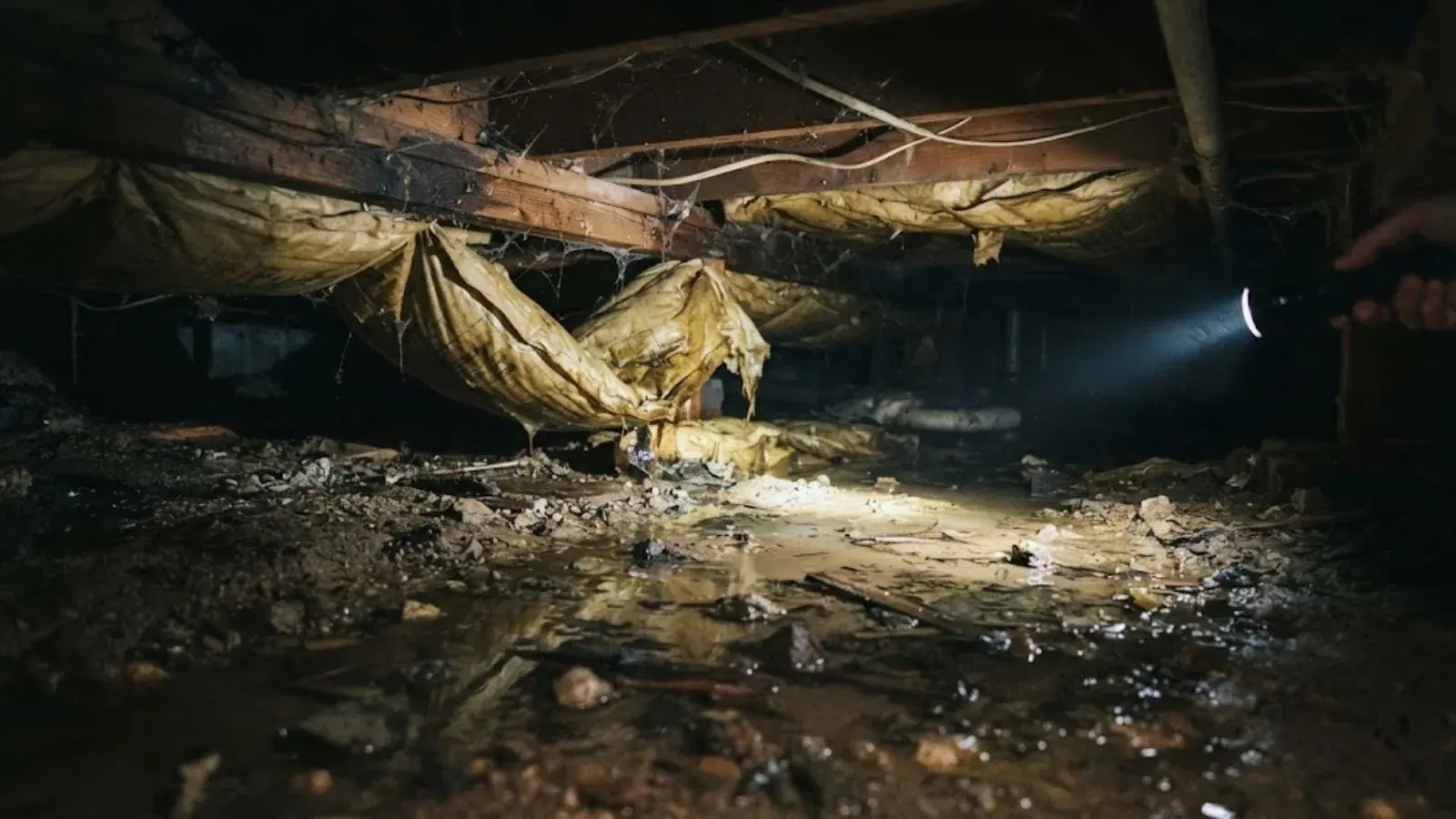
Safety first
A flooded crawlspace can hide electrical hazards and poor air.
- 1Do not enter a crawlspace with standing water if wiring or equipment is nearby.
- 2Turn off power to the crawlspace at the breaker if you can do so safely.
- 3Never run a gas-powered pump indoors or in a crawlspace.
- 4Look at the water from the access point with a flashlight.
- 5Call us if the water level is rising or you cannot find the source.
Groundwater or a pipe
Two simple checks tell you which one you have. First, does the water appear only after rain and slowly recede? That points to groundwater or runoff. Second, with every fixture off, does the water meter keep moving? If so, a pipe is leaking and the water has nothing to do with the weather.
Both can happen together, which is why we confirm before we recommend anything. Our leak detection page explains the meter test.
Source and likely fix
Match what you see to the likely cause.
| What you see | Likely source | Likely help |
|---|---|---|
| Wet only after rain | Groundwater or surface runoff | Drainage, sump pump, grading |
| Water near downspouts | Roof runoff | Extend downspouts |
| Wet on dry days | Pipe leak | Leak detection |
| Damp air and condensation | Humidity | Vapor barrier, dehumidifier |
| Dirty water at a drain | Sewer backup | Line cleaning |
What helps a wet crawlspace
A sump pump in a pit at the lowest point moves collected water out through a discharge line. Our sump pump repair page explains pumps and backups. A heavy vapor barrier over the soil slows moisture rising from the ground. Gutters and downspouts that carry roof water well away from the foundation reduce what reaches the soil.
Grading, foundation crack repair and structural waterproofing are separate trades. Our basement waterproofing page explains where plumbing ends and others begin.
Rain in Chapel Hill and Carrboro
Bolin Creek, Morgan Creek and Booker Creek run through the area, and heavy rain runs fast over paved and sloped ground. Flash flooding in early July 2025 displaced residents of several Chapel Hill apartment and condo communities, according to Carolina Public Press. A storm on June 30, 2013 dropped more than five inches of rain in a few hours in Carrboro, according to Chapelboro.
Most homes will not flood like that, but a wet crawlspace is common. If your home is in a low area, ask the town about flood maps. Homeowners policies usually exclude flood and groundwater, so ask your agent about separate coverage.
Mold and insulation
Wet insulation sags and stops insulating, and damp wood can grow mold in a couple of days. If insulation is soaked or you see visible mold, a restoration company handles drying and remediation. We handle plumbing and drainage.
Insulation, vapor barriers and dehumidifying
Wet crawlspaces are hard on the things around them. Fiberglass insulation between the floor joists absorbs moisture, sags and stops working. Wood that stays damp can rot, and the HVAC ductwork in the space can sweat. A vapor barrier, a heavy plastic sheet over the soil, reduces moisture rising from the ground.
A dehumidifier made for crawlspaces can lower humidity, and some owners add them after the water problem is controlled. They do not remove standing water, and they do not replace a pump or drainage. Ask a crawlspace specialist about sealed or encapsulated crawlspace systems if humidity is a long-term problem.
If you see mold on more than a small area or the smell is strong, a remediation company is the right call. Do not disturb it with a broom or a fan. Take photos and call for advice.
What a plumber looks at
When we come to a wet crawlspace, we look at the pit and pump if there is one, the discharge line and where it ends, the condition of the supply and drain lines, the water heater if it sits in the space and the cleanout. We also check whether the water is clear or dirty, because that tells us whether it came from the ground or from a drain.
We tell you what falls in our trade and what belongs to others, and we give you a clear price before work starts.
Keeping a record
Take photos and note the date, the amount of rain and how long the water stays. A record helps a plumber or crawlspace specialist see the pattern, and it helps if you ever need to talk to your insurer.
Check again after the next big storm, and if the water appears in the same place each time, a drain and pump system is worth pricing. Our 24/7 line is open if the water is rising and you need advice right away.
Common questions
It is common, but it should be dealt with. Standing water damages insulation and wood.
If water collects regularly, a pump helps. We look at the pattern before we recommend one.
Our line is answered 24/7.
Usually not. Ask your agent about flood and water backup coverage.
Yes. See our Carrboro page and all of our service areas.